The number of residential bidirectional charging options expanded significantly in 2026, but vehicle-charger compatibility, grid integration, and cost remain important barriers to widespread adoption.
November 24, 2026
The residential bidirectional charging market made meaningful progress in 2026. A growing number of electric vehicles can now be paired with commercially available bidirectional charging systems, allowing customers to use their vehicle batteries for home backup power, manage household electricity consumption, and, in some cases, export electricity to the grid. What was largely a market of demonstrations and product announcements just a few years ago is beginning to take shape as a commercial market.
By October 2026, at least five distinct residential bidirectional charging system offerings had entered the U.S. market, collectively supporting a growing number of light-duty EV models, although product availability, compatible vehicles, and supported functionality varied considerably. Four use DC bidirectional charging, while Tesla’s Cybertruck represents the only commercially available AC bidirectional charging offering in this group. Most support home backup power, and several have demonstrated or enabled grid-parallel operation, including exports to the utility grid. This growing product availability represents an important foundation for expanding residential vehicle-to-grid (V2G) participation.
A Growing List of Commercial Products
| Charging System | Compatible Vehicles | Maximum AC Discharge Power* |
| dcbel Ara | Nissan LEAF, Volvo EX90, Polestar 3 | 7.6 kW** |
| Ford Charge Station Pro + Home Integration System | Ford F-150 Lightning*** | 9.6 kW |
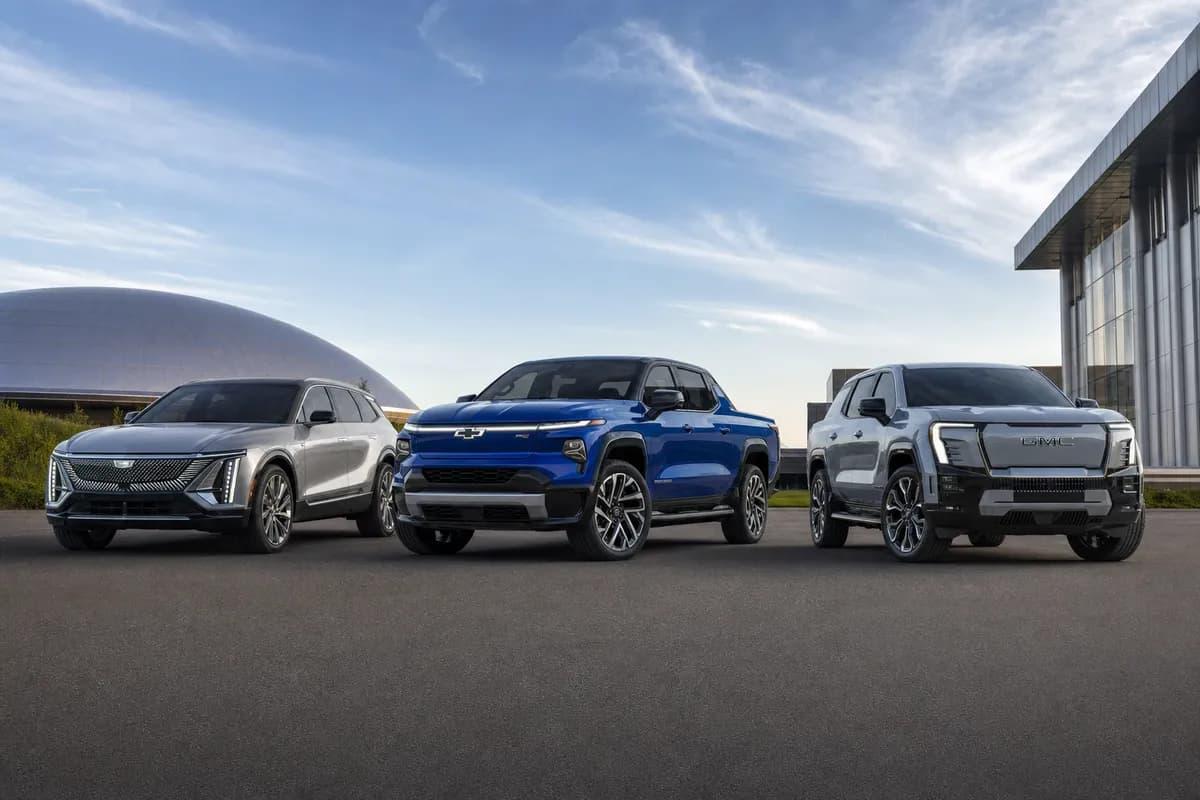
| GM Energy PowerShift + V2H Enablement Kit | 13 models across Chevrolet, Cadillac, and GMC brand EVs | 9.6 kW |
| Wallbox Quasar 2 | Kia EV9; EV6 compatibility identified in the market inventory | 12.48 kW |
| Tesla Powershare | Cybertruck**** | 11.5 kW |
*Power ratings represent maximum AC discharge output rather than EV charging power. Actual discharge capacity may vary depending on vehicle compatibility, equipment configuration, and operating conditions. These ratings do not necessarily represent the maximum power authorized for export to the utility grid.
**The dcbel Ara is listed as a 15.2 kW bidirectional charging system by the California Energy Commission, while its separately listed grid-interactive inverter has a continuous AC output rating of 7.6 kW. The lower figure is used here for comparison, pending clarification of the system’s full discharge capability.
***Ford discontinued production of the all-electric F-150 Lightning, although its existing bidirectional charging systems remain in service. Ford is shifting to an onboard AC bidirectional charging architecture with its forthcoming Fathom electric pickup, expected to enter the U.S. market in 2027.
****Tesla announced plans in November 2026 to end Cybertruck production by late summer 2027. Existing Powershare capabilities remain relevant to current Cybertruck owners.
The expansion is particularly notable among General Motors vehicles. GM Energy’s PowerShift charger supports an increasingly broad range of Chevrolet, Cadillac, and GMC EVs, extending bidirectional capability beyond premium pickups and SUVs to more affordable models such as the Equinox EV. Meanwhile, third-party charger manufacturers, including dcbel and Wallbox, are establishing partnerships with automakers to expand the range of compatible vehicles. These partnerships are helping bring bidirectional charging to market without requiring every automaker to develop its own charging hardware.
Certification under UL 1741, which incorporates IEEE 1547-2018 requirements, provides an established pathway for connecting bidirectional charging systems to the grid. For DC systems, certification focuses on the inverter located in the charging equipment, while AC systems require evaluation of the onboard vehicle inverter and associated equipment. Tesla’s Powershare system, for example, was certified under a UL 1741 Certification Requirement Decision (CRD). Regardless of the approach, utility interconnection approval is still required before discharging power to buildings and the grid.
Beyond Backup Power: The Emerging V2G Market
Home backup remains the primary commercial application for many first-generation bidirectional charging products, allowing EV batteries to power household loads during outages. Realizing their broader value, however, requires grid-parallel operation, where EVs can discharge to buildings or the grid while connected to the operating grid to reduce household electricity costs or export energy in response to grid needs.
Several developments demonstrate progress toward this broader functionality. Ford and Sunrun demonstrated residential V2G using F-150 Lightning trucks in BGE’s Maryland service territory, while Wallbox and The Mobility House successfully interconnected a Kia EV9 and Quasar 2 system in California for grid-parallel operation with exports. dcbel’s Ara, compatible with the Nissan LEAF, Volvo EX90, and Polestar 3, was also added to PG&E’s expanded V2X program. Meanwhile, Tesla’s Cybertruck Powershare Grid Support became available to eligible customers in parts of California and Texas, enabling owners to earn compensation for exporting electricity during periods of high demand.
Tesla’s bidirectional charging strategy is also shifting. In November, the company announced plans to end Cybertruck production by late summer 2027, a noteworthy decision given that Cybertruck is currently Tesla’s only vehicle supporting grid-parallel AC bidirectional charging through Powershare. While Tesla is expanding home backup capabilities to the Model 3 and Model Y, these systems require a Powerwall 3 and do not currently support grid-parallel operation. This raises questions about Tesla’s near-term residential V2G strategy, even as it extends backup-power capabilities to more vehicles.
Vehicle-Charger Pairing Remains a Constraint
Despite the growing product lineup, the residential bidirectional charging market remains characterized by tight pairings between specific EV models and charging systems. Some are developed by automakers, such as Ford and GM, while others rely on partnerships with third-party equipment manufacturers, including Kia and Wallbox or Volvo and dcbel. Even when a vehicle and charger are technically capable of bidirectional operation, commercial functionality may depend on manufacturer authorization, compatible software, and approved installation configurations.
This fragmented landscape contrasts with conventional one-way EV charging, where customers generally have broad flexibility in selecting charging equipment. Emerging standards and communications protocols, including ISO 15118-20 and LIN-CP (Local Interconnect Network over Control Pilot), offer potential pathways toward greater interoperability between vehicles and bidirectional charging equipment. As explored in our recent V2G News article on University of Delaware research, LIN-CP uses simpler, lower-cost communications hardware and offers an alternative to the more complex power-line communications used by ISO 15118-20. Greater interoperability could expand equipment choices, increase competition, and reduce costs, although achieving this will require coordinated implementation of technical standards by automakers and charger manufacturers.
AC bidirectional charging could also change the economics of residential systems by eliminating the need for a separate offboard inverter. Tesla’s Cybertruck currently provides this capability in the United States, while Ford’s planned Fathom pickup and emerging European offerings suggest additional manufacturers are exploring this architecture.
International Bidirectional Charging Market
Beyond the United States, residential bidirectional charging is also advancing in Europe and Australia, where automakers, charging equipment manufacturers, and energy service providers are introducing integrated solutions that enable EV batteries to support household electricity needs and participate in electricity markets. Several international offerings are moving beyond demonstrations to commercial deployment, including systems that combine compatible vehicles, bidirectional chargers, and electricity tariffs that compensate customers for providing grid flexibility.
The following table highlights selected international vehicle-charger pairings as of October 2026. This is not an exhaustive inventory, and commercial availability varies by country, utility program, and vehicle configuration.
| Charging System | Compatible Vehicles | Market / Status | Source |
| Plug Inn PowerBox (formerly Mobilize PowerBox Verso) | Renault 5 E-Tech, Renault 4 E-Tech, selected Megane E-Tech | France — commercial V2G | Renault/Mobilize |
| BMW Wallbox Professional | BMW iX3 (Neue Klasse) | Germany — commercial package available to order | BMW/E.ON |
| Elli BiDi Charger | Selected VW ID., VW Commercial Vehicles, and CUPRA EVs | Germany — commercial launch planned for late 2026 | Volkswagen/Elli |
| StarCharge V2G Halo | BYD Atto 3 | Australia — limited customer trial | Origin Energy |
Note: This table presents selected international vehicle–charger pairings as of October 2026 and is not exhaustive. Commercial availability and supported functionality vary by market, vehicle model, and program.
China is also making substantial investments in V2G, although deployment remains concentrated in public charging infrastructure and demonstration projects rather than commercially available residential systems. In 2025, the government announced 30 V2G pilot projects across nine cities and subsequently established a target of more than 5,000 additional bidirectional charging facilities by the end of 2027. Despite this activity, incomplete standardization of China’s bidirectional charging protocols and proprietary communications between chargers, aggregators, and the grid remain barriers to broader commercialization, according to the International Energy Agency’s 2026 V2G assessment.
These international developments reinforce an important lesson for the U.S. market: expanding bidirectional charging requires more than compatible vehicles and charging equipment. Successful commercialization also depends on integrating these technologies with electricity tariffs, grid interconnection requirements, and customer compensation mechanisms that make participation practical and economically attractive.
Looking Ahead to 2027
One of the most anticipated developments for 2027 is Ford’s Fathom electric pickup, which is expected to offer more than 10 kW of AC bidirectional power using onboard inverter technology and SAE J3068 LIN-CP communications. With a projected starting MSRP of $28,350 and less expensive home charging equipment than Ford’s first-generation system, Fathom could provide an important test of whether AC bidirectional charging can reach a broader range of consumers.
Other automakers, including Toyota, Hyundai, Rivian, Volkswagen, and Lucid, have announced or are developing bidirectional charging capabilities, while equipment manufacturers including ChargePoint, Enphase, Emporia, Autel, and SolarEdge are working toward additional products. Not all announced solutions will necessarily reach commercial availability in 2027, but the expanding range of automakers and equipment suppliers signals growing industry commitment to bidirectional charging.
The next phase of market development will be measured not simply by the number of EVs advertised as bidirectional-capable, but by how many customers can purchase, install, and operate complete systems that deliver both backup power and discharge during normal grid operations to homes or the grid. Progress will also depend on whether utilities establish clear interconnection pathways and compensation mechanisms that recognize the flexibility these systems can provide.
