August 18, 2026
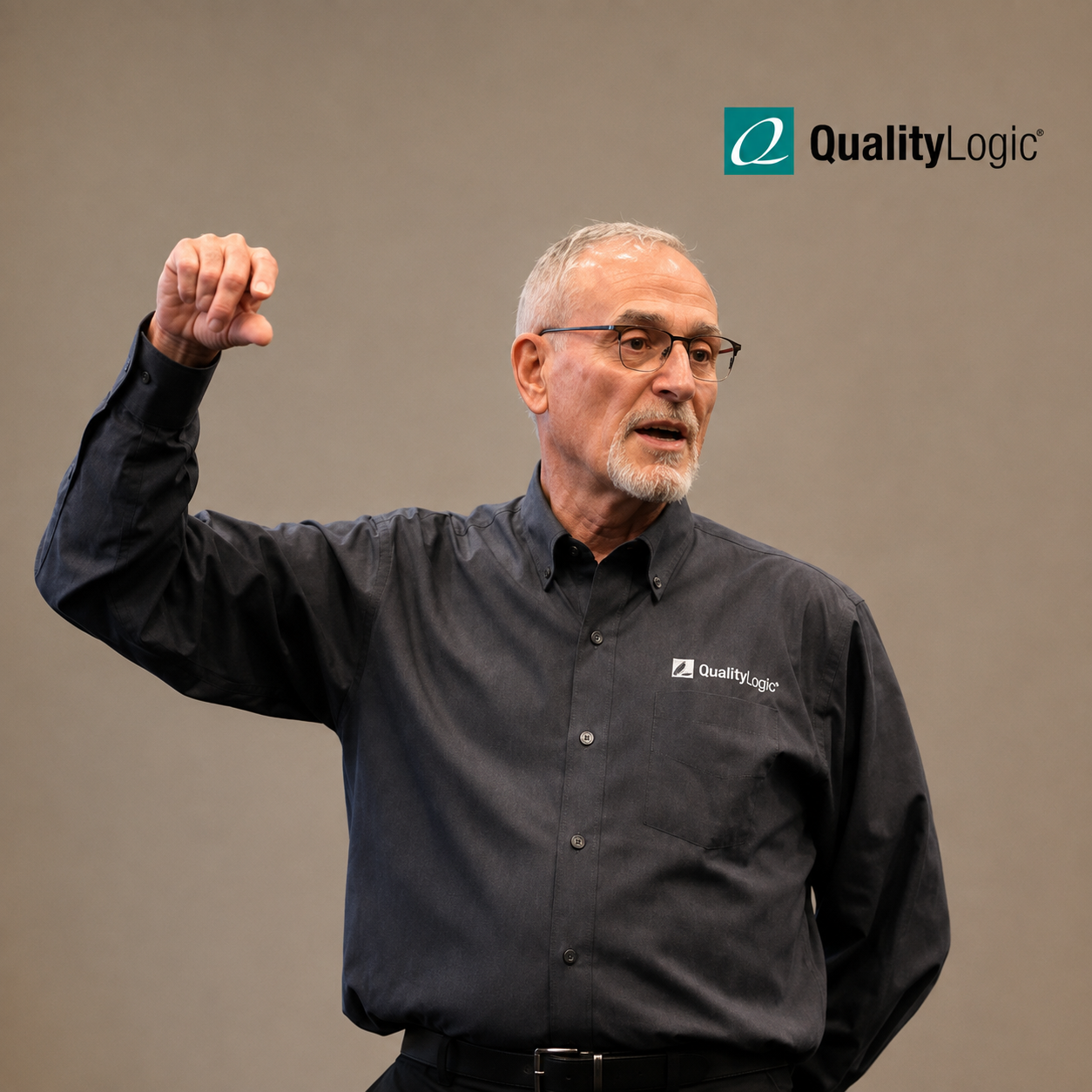
James Mater, Co-Founder and Director of Strategy, Smart Energy, QualityLogic
Vehicle-to-grid systems depend on much more than a compatible electric vehicle and bidirectional charger. To operate as reliable grid resources, vehicles, charging equipment, charge-management platforms, aggregators, and utility systems must communicate and perform together across a complex chain of technologies and standards.
V2G News spoke with James Mater, Co-Founder and Director of Strategy, Smart Energy at QualityLogic, about the industry’s end-to-end interoperability challenge and a new initiative intended to begin addressing it. Mater also co-chairs the V2G Business, Policy & Technology Forum, which will host an end-to-end interoperability testbed and demonstration during its eighth gathering, scheduled for October 27–29, 2026, in Detroit.
QualityLogic has spent decades developing testing tools that help manufacturers, laboratories, and utilities verify compliance with communications and grid-interconnection standards. Mater believes the next challenge is to move beyond testing individual products or interfaces and demonstrate that independently developed, standards-based components can work together as a complete V2G system.
The interview has been edited for length and clarity.
V2G News: To start, could you describe your academic and professional background and the evolution of QualityLogic?
Mater: My undergraduate degree is in physics, and I also have an MBA, so my background has always combined the technical and business sides. I spent a couple of years in the military and then worked in several industries, including oilfield services and technology companies developing software and hardware.
In the early 1990s, I started a company with a partner. We eventually merged with another company, and that became QualityLogic in 1999. Three of the original founders are still working together today.
QualityLogic’s foundational expertise is interoperability. Our early work was in the printing industry, where manufacturers used our tools to ensure that a document sent to different printers would come out as expected. The products were produced by different companies, but customers expected them to work together. That basic interoperability problem has remained central to our work as we have moved into new industries.
We entered the smart-grid sector around 2008. At the time, the federal government was making a significant investment in smart-grid research and development under the ARRA (American Recovery and Reinvestment Act), and the Bonneville Power Administration, Pacific Northwest National Lab, regional utilities, and technology companies were beginning a major smart grid demonstration project in the Pacific Northwest.
We initially knew very little about the energy industry. But when our engineers examined the technical specifications, they recognized the same basic challenge we had addressed elsewhere: take a communications standard and develop a test suite that can determine whether products implement it correctly.
The ARRA project led to our work in the Smart Grid Interoperability Panel (SGIP) which led to the OpenADR Alliance and the test suite used for OpenADR certification. We subsequently became deeply involved with IEEE 2030.5, developing test tools, training thousands of engineers, and helping manufacturers implement and certify their IEEE 2030.5 implementations. When California incorporated IEEE 2030.5 into Rule 21, that work grew into a global business supporting inverter manufacturers, testing laboratories, and utilities.
V2G News: How did that work lead QualityLogic into distributed energy resources and eventually bidirectional charging?
Mater: We became involved in IEEE 1547 and helped develop testing specifications for the latest version of the standard. IEEE 1547 establishes the basic interconnection requirements in North America for distributed energy resources that operate in parallel with the electric grid, including solar and battery-storage systems.
The latest version added communications requirements. That created an opportunity to automate portions of the certification process using standardized communications rather than relying on manually adjusting custom interfaces for every inverter product.
Certification testing at a laboratory can take eight to twelve weeks. Some of that involves physical safety, temperature, electromagnetic testing, and other electrical and hardware-related testing. But an increasing share involves firmware, grid-support functions, and communications. We developed tools to automate much of that portion of the process.
Manufacturers can use our tools while developing a product, and certification laboratories can use the same tools when conducting formal testing. That reduces uncertainty, time, and effort for everyone.
As bidirectional charging companies began developing systems that could export power from EV batteries, they encountered many of the same interconnection and grid-code requirements in order to execute V2G services to utilities. Companies such as Nuvve and dcbel began using our tools because their products had to demonstrate that they could export power safely and comply with applicable grid requirements.
That naturally drew us into V2G. The standards, communications protocols, and testing requirements were directly connected to work we were already doing with solar and stationary battery systems.
V2G News: What personally attracted you to the V2G interoperability challenge?
Mater: I am an engineer at heart, and I like complicated problems. Demand response is important, but there is only so much demand that can be managed, and the underlying technology can be relatively straightforward.
Distributed energy resources are much more complex. Once vehicles become both loads and potential sources of energy, the problem becomes even more interesting.
Interoperability is also embedded in QualityLogic’s DNA. Our business has always involved helping ecosystems of vendors achieve predictable behavior between independently developed products. When I began attending EV charging interoperability testing events, it was clear that the charging industry had a difficult interoperability problem.
At those events, manufacturers bring vehicles and charging stations together and test different combinations. You could almost hear the testers cheering because a vehicle had successfully connected and charged. That gives you a sense of how challenging even basic charging interoperability has been.
QualityLogic developed tools to analyze charging sessions and identify why failures occurred. That work gave us the opportunity to participate in testing events around the world and become more familiar with automakers, charging-equipment manufacturers, and standards organizations.
Over the past several years, the focus has increasingly expanded from unidirectional charging toward bidirectional charging. Automakers recognize that bidirectional capability could create an additional source of value for their customers. From our perspective, adding V2G was a natural extension of our interoperability and compliance work with distributed resources for utility systems.
V2G News: The industry now has numerous standards addressing different portions of the V2G system. Why do standards not necessarily guarantee interoperability?
Mater: A standard provides a common technical specification. Interoperability means that separately developed products implementing that specification actually work together and produce the expected behavior.
Those are not the same thing.
A manufacturer can interpret part of a standard differently, implement only certain optional functions, or make design choices that create unexpected interactions with another product. Two products can each claim compliance with the same standard and still fail to interoperate when connected.
Testing is what closes the gap between standards on paper and interoperable systems in practice.
In the EV industry, most interoperability work has historically focused on the vehicle and charging station. The central question was whether a customer could arrive at a charging location, plug in, and successfully charge.
There are additional layers behind that interaction. The charging station communicates with a charging-network or charge-management platform. There are payment systems, Plug & Charge functionality, identity management, and cybersecurity requirements. Considerable work has gone into standardizing and testing those components.
V2G adds the utility and grid-operations side. That introduces another industry with its own standards, procurement practices, regulatory requirements, operating systems, and communications protocols.
Utilities have traditionally integrated large systems through project-specific engineering. When a utility builds a multimillion-dollar substation, it expects engineers to configure and integrate the components. Plug-and-play interoperability has not historically been central to the utility business model.
That approach does not scale well when a utility may ultimately need to interact with thousands or millions of customer-owned distributed resources. Rooftop solar, batteries, and EVs require utilities to think differently about interoperability.
V2G News: What does “end-to-end interoperability” mean in the context of V2G?
Mater: At a basic level, the chain includes a utility or grid operator, a charge-management or aggregation platform, a charging station, and an electric vehicle.
The question is whether a utility can send an instruction through that chain and receive the expected response from the charging station and vehicle. For example, can the utility request that charging stop during a peak period? Can the system then initiate an export of power, subject to the vehicle owner’s mobility requirements and other operational constraints? Can performance be measured and reported back through the system?
Each interface may use a different communications standard. The EV and EVSE may communicate using ISO 15118 or another charging protocol. The charging station may communicate with a charge-management system through OCPP. A utility may communicate with a distributed-energy-resource management system or aggregator through IEEE 2030.5, OpenADR, or another interface.
The complete system must translate a grid need into coordinated physical behavior at the charger and vehicle and then return accurate information about what happened.
Most pilots and demonstrations of V2G to date have rely on at least some proprietary interfaces or tightly controlled product combinations. That is valuable and has helped prove that V2G can work. But it is different from a scalable, standards-based ecosystem in which a utility can procure interoperable components from multiple vendors.
Tesla is a good illustration of the distinction. Tesla has demonstrated that it can create a strong customer experience by controlling the vehicle, charger, software, and communications environment. The challenge for the wider market is achieving similarly reliable performance across products made and operated by different companies.
V2G News: How does the proposed V2G Forum testbed differ from the interoperability events already hosted by organizations such as CharIN and the Open Charge Alliance?
Mater: CharIN has played a critical role in EV charging interoperability. Its testing events primarily bring vehicle and EVSE manufacturers together to determine whether their products can communicate and successfully complete charging sessions using standards such as ISO 15118.
CharIN is beginning to move toward bidirectional charging, but its core focus has historically been the vehicle-to-charger interface. The utility system and applicable grid codes introduce an additional set of requirements that are relatively new to the automotive and charging industries.
The Open Charge Alliance (OCA), which develops OCPP (Open Charge Point Protocol), addresses another critical portion of the system: communications between the charging station and the charge-management platform. OCA also hosts interoperability events and is increasingly addressing bidirectional use cases.
Our goal is not to duplicate those efforts. It is to connect the pieces and focus on the performance of the complete system, including the utility side.
We expect organizations such as CharIN, the Open Charge Alliance, national laboratories, utilities, and standards bodies to learn from and build on the V2G Forum End-End Demonstration work. The V2G Forum is not a standards-development organization. Its role is to bring stakeholders together, identify gaps in both policy and technology that slow V2G progress, and help accelerate the adoption of V2G.
V2G News: What led to the decision to establish an end-to-end interoperability initiative through the V2G Forum?
Mater: At previous V2G Forums, we invited companies to exhibit standards-based products. The idea was to give attendees an opportunity to see products implementing the standards the industry had been discussing.
The demonstrations were valuable, but they also exposed the practical difficulty of assembling complex systems at a conference. Products arrived at different times, systems had not been staged together beforehand, and some of the equipment did not perform as expected.
That experience prompted a basic question: rather than treating these as individual product demonstrations, why not create a structured testbed in which participants could prepare in advance and test a complete V2G architecture?
We began developing a concept and quickly discovered strong industry interest. Approximately 15 companies initially responded with information about the equipment, software, expertise, or other capabilities they could contribute.
QualityLogic is also participating in the International Energy Agency Task 53, a multiyear international initiative also working on end-to-end V2G interoperability. That effort is heavily connected to European standards and provides an opportunity to learn from work being undertaken internationally. The V2G Forum project is aimed at similar goals in a North American context using the standards and grid requirements relevant here.
V2G News: What do you hope to demonstrate at the fall V2G Forum in Detroit?
Mater: The immediate goal is to determine what the participating companies can bring to each part of the architecture. Who has a charge-management system? Who can provide an EVSE? Who can represent the utility or grid-management side? Which communications standards do the products support?
Vehicles are one of the most difficult components because there are still relatively few commercially available EVs that support standards-based bidirectional charging, especially V2G-AC. But more are coming.
Our hope is to assemble at least one complete demonstration of a grid-responsive use case, such as peak shaving. The utility side would send a signal through the system, charging would be reduced or stopped, and the vehicle would export power back through the charging equipment.
The important point is that the participating products should be certified or demonstrably compliant with the relevant standards. If independently developed components can be assembled and perform the requested behavior using open standards, that would be an important accomplishment.
The eighth V2G Business, Policy & Technology Forum will take place October 27–29 in Detroit, with DTE Energy participating in the interoperability effort. DTE is implementing a distributed-energy-resource management project and can help represent the utility end of the chain.
The project is still evolving. We have interested participants and an architectural model, and we are now matching available components to each part of the system and determining what can realistically be demonstrated.
V2G News: Is the longer-term vision to establish an ongoing testbed rather than conduct a one-time demonstration?
Mater: Yes. The Detroit demonstration is a first step. We have no plans in the V2G Forum to establish a permanent testbed but hope to provide valuable lessons and guidance and encouragement to any labs that do plan to build such a test system.
Longer term, the industry needs a repeatable environment where utilities, manufacturers, laboratories, and software providers can test end-to-end system behavior. That environment would include grid simulators, vehicle or equipment emulators, communications test tools, and the ability to represent the different layers of the V2G architecture.
From QualityLogic’s perspective, we already have test tools relevant to portions of this system, and we are developing additional capabilities. But the broader need is not about any one company. Utilities and testing laboratories need a practical way to determine whether products can operate as part of a complete V2G system.
There is currently no comprehensive end-to-end V2G certification. The V2G Forum work could eventually help the industry consider whether such a certification or validation process is needed. Could a product or system be connected to a standardized testbed and demonstrate that it can perform the full chain of functions?
We do not yet know exactly where this will lead. The first task is to build the environment, connect the components, and learn what works and what fails.
V2G News: Beyond interoperability testing, what is most needed for V2G to achieve commercial scale?
Mater: The policy and market structures must pay for the value V2G provides.
We can continue improving the standards and solving interoperability problems, but companies will not deploy V2G at scale unless there is a business case. Once utilities and markets begin paying consistently for the grid services vehicles can deliver, the industry will respond because customers and companies will have a reason to invest.
That is the biggest missing piece in the United States.
Europe is moving more quickly in some respects because it has a more immediate need to integrate renewable energy, manage the grid, and use distributed flexibility. European policymakers and industry stakeholders are working to establish common requirements and deploy standards-based systems at scale.
There are still national differences in European grid codes, just as individual states and utilities in the United States can apply IEEE 1547 differently. Manufacturers must be able to configure products for those regional requirements. But Europe is actively working through those issues because it has decided that this capability is needed.
China is also moving aggressively on V2G. Australia presents a different challenge: it wants to deploy bidirectional charging but represents a smaller vehicle market, so it must closely follow the direction taken by global automakers and standards organizations.
The United States has considerable technical capability, but it needs stronger market signals and policy support. Interoperability testing can reduce technology risk and make it easier for utilities to trust and procure V2G systems. Technology cannot, by itself, create the revenue required for widespread commercial adoption.
V2G News: What would successful end-to-end interoperability ultimately mean for the V2G market?
Mater: It would mean moving away from one-off pilot projects in which a specific vehicle, charger, platform, and utility system must be custom-engineered to work together.
A scalable market requires independently developed products that can be combined with much less integration effort. Utilities need confidence that a resource will respond safely when dispatched. Automakers and charging-equipment manufacturers need clarity about the requirements their products must satisfy. Customers need systems that work without requiring them to understand the underlying standards.
Standards provide the common language, but testing demonstrates that everyone is actually speaking it in the same way.
That is the opportunity in front of us: connect the complete V2G chain, identify the gaps, and create a pathway toward V2G systems that utilities can rely on and customers can use without having to think about what is happening behind the scenes.
