September 15, 2026
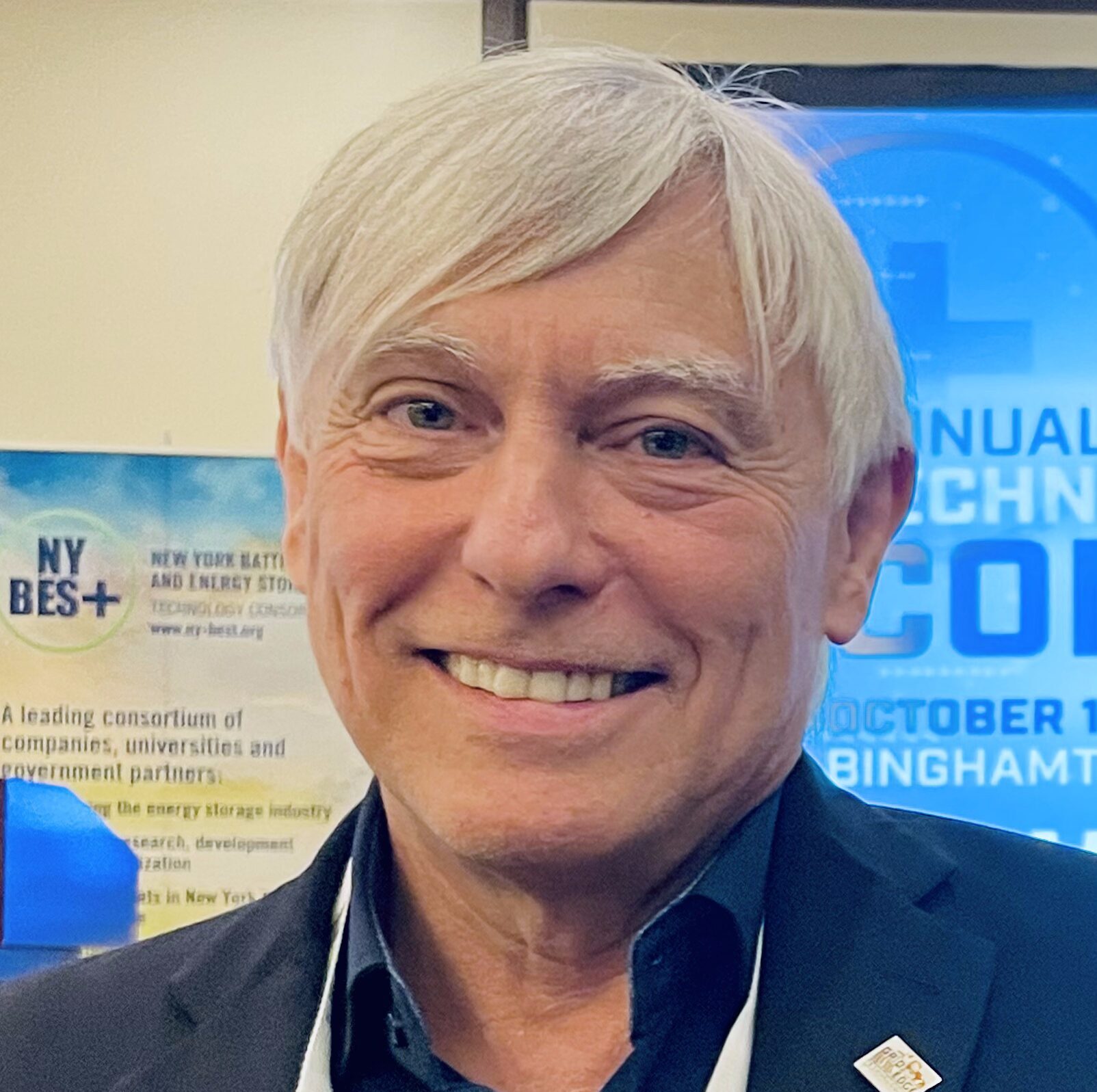
Nachum Sadan, Founder and CEO, GridEdge Networks
Vehicle-to-grid projects can be delayed or made more expensive by limited distribution capacity and traditional interconnection practices that plan around worst-case grid conditions. Because those conditions may occur only during limited periods, substantial grid capacity can remain underutilized while projects are still required to pay for costly upgrades. Flexible grid connections offer an alternative by allowing EV charging and exports to adjust when local constraints arise, making better use of existing infrastructure while reducing or deferring the need for upgrades.
V2G News has previously covered the increasingly important role of flexible grid connections in unlocking additional capacity for EV charging and V2G without compromising distribution-system limits.
V2G News spoke with Nachum Sadan, Founder and CEO of GridEdge Networks, about how the company’s DERCOM platform applies this approach to solar, storage, EV charging, and V2G. Sadan sees flexible interconnection, local grid monitoring and control, and stronger interoperability as important building blocks for scaling bidirectional charging.
The interview has been edited for length and clarity.
V2G News: To start, please describe your professional background and what led you to found GridEdge Networks.
Sadan: I am an electrical engineer by training and a serial entrepreneur by career. I hold an MSEE from Northeastern University and began building networking companies in 1988. GridEdge is the sixth startup company I have founded, and I have had two successful exits. My earlier work was in data networking and telecommunications, where I saw the industry move from centralized proprietary networks toward distributed open standards architectures. I then spent more than two decades in the power sector and saw the same transformation begin there: electricity is moving from a centrally managed, one-way system toward a distributed model that must integrate generation, energy storage, flexible loads, and electric vehicles at the grid edge. That transition is what brought me to GridEdge. My goal has been to apply the communications, control, and systems-engineering experience I developed in networking to make DER interconnection safer, faster, and more economical and help utilities in their transition to a future flexible grid.
V2G News: What problems were GridEdge originally created to solve, and how did that lead to the development of DERCOM?
Sadan: GridEdge was created to solve a fundamental grid-edge problem: how to connect distributed energy resources safely and reliably without treating every new solar array, battery, or flexible load as a reason to rebuild the distribution system. Utilities need dependable protection and visibility, while developers and customers need an interconnection process that is less costly and less time-consuming.
Our early work focused on practical interconnection technology. We invented the Distributed Generation Permissive, or DGP technology as a protection solution for safely interconnecting distributed generation, and it was deployed in more than 80 utility and independent power producer projects. Over the last decade, I have been participating in the IEEE 1547 DER interconnection standard as a working group member and contributor. My standards work and the DGP experience led to the realization that a distributed grid needs distributed controls and it showed us that utilities need real-time awareness of distribution constraints and the ability to manage DER behavior at the point where those constraints are visible. That led to DERCOM, our Distributed DER Management System. DERCOM extends the earlier interconnection focus with a point product like DGP into a comprehensive grid integration platform that includes distributed monitoring, communications, and control. It is designed to make flexible interconnection possible by connecting substation-level grid conditions to real-time control of solar, storage, EV charging, V2G, and other DERs at the edge.
V2G News: What is flexible interconnection—scheduled versus dynamic—and how does it differ from the traditional approach of fixed or static interconnections?
Sadan: Flexible interconnection or Flex-IX, is the use of intelligent software controls to replace expensive hardware buildouts. The common utility practice today is firm or fixed interconnection. A traditional fixed interconnection typically grants a resource a constant operating limit based on the most constrained conditions that could occur on the system. That means maximum nameplate generation capacity to minimum load ratio. It is simple to administer, but leaves substantial usable capacity stranded because the grid is not at its most constrained state all the time through the year.
Flexible interconnection allows the operating limit to reflect actual system conditions. There are two Flex-IX methods: scheduled and dynamic. Scheduled flexibility uses pre-established operating windows or export limits; for example, a resource may be asked to reduce export during expected peak conditions. Dynamic flexibility goes further: it uses near-real-time measurements and controls to adjust a DER’s charging, discharging, or export limit when a local constraint actually appears and to restore capacity when the constraint clears.
The important distinction is that a dynamic approach converts interconnection from a one-time, static capacity decision into an operational capability. With appropriate protection coordination, communications, and fail-safe behavior, it can enable more DER capacity to connect while preserving the utility’s ability to maintain voltage, loading, and other distribution-system limits.
Dynamic flexible interconnection has enormous economic benefits. A 2026 study conducted by EPRI, NYSEIA, and NY-BEST in New York includes a cost-benefit analysis of deploying Flex-IX across the state. The numbers are convincing. New York can add another 3.3 GW of hosting capacity and save ratepayers over $7.5B by using existing infrastructure and avoiding costly upgrades.
V2G News: Please describe the DERCOM solution, both the hardware and software components.
Sadan: DERCOM stands for DER Control, Optimization and Monitoring. It is a distributed, multi-tier operational-technology platform with a substation layer, an edge layer, and a secure communications layer between them. At the substation, the D-DERM controller connects to utility measurement and line equipment such as meters and sensors and observes the electrical conditions on the relevant distribution circuit. At the customer or DER site, the E-DERM controller connects to DER equipment and local meters. Depending on the application, that can include solar, stationary storage, EV chargers, V2G equipment, and site-load metering.
The software provides the closed-loop intelligence. It collects measurements, detects operating constraints, applies utility-approved control algorithms, and communicates commands to the edge equipment. In the 2026 Connecticut V2G demonstration, DERCOM monitored substation voltage and site-level power flows and controlled charging and discharging limits locally. It also performed loss-of-communications recovery checks and stored local meter data.
DERCOM is intended to be utility-owned and utility-operated. The utility establishes the applicable operating limits, control logic, DER priorities, and other configuration parameters; the system automates execution within those approved parameters. Operating data, alarms, and events can be made available to the utility control center, and utility operators retain supervisory override through SCADA integration where required. Interoperability is an important part of the design. DERCOM uses standard communications protocols such as Modbus and DNP, and includes an adaptation layer for translating proprietary equipment interfaces into an open control framework. In the V2G work, we also added OCPP-based local charger control. This combination of utility-facing hardware, edge controls, standardized communications, and protocol-aware software is what makes the platform applicable across different DER types.
V2G News: What are the primary use cases for the DERCOM solution?
Sadan: DERCOM was designed as a modular platform that can support several use cases. The primary use case is flexible interconnection: enabling solar, energy storage, EV charging, and other DERs to operate within real-time distribution-system limits rather than relying only on a fixed interconnection limit.
A second use case is EV flexible managed charging and discharging. Our Connecticut project demonstrated local control of EV charging and V2G/V2L discharging, with controls that can respond to grid conditions and site load. For a fleet operator, this can help coordinate charging with operational needs while allowing the battery to support onsite load, demand response, or, where approved, grid export. Additional use cases include flexible load management, substation-to-edge monitoring, voltage and constraint management, integration of co-located solar and storage, and interoperability between utility systems and equipment that uses different communications protocols. The common requirement is the same: the utility needs visibility and controllability, while the customer needs a practical way to connect and operate valuable distributed assets.
V2G News: What are the benefits of a substation-centered, real-time control approach relative to the standard ways utilities integrate DERs and flexible load onto their systems?
Sadan: The principal benefit is that the system sees grid conditions where they matter operationally: at the feeder and substation boundary. Most of the constraints that drive interconnection upgrades, including feeder thermal loading, transformer loading, reverse power flow, and voltage limits are local, not centralized. DERCOM uses closed-loop measurements at that boundary to detect those constraints and send targeted control signals to the participating resources.
That creates a direct relationship between grid need and DER response. If a monitored condition approaches a utility-defined threshold, the platform can limit charging, reduce export, or change a discharge set point. If the requested adjustment cannot be achieved, the design supports a predefined fail-safe response, including DER trip where required. The approach can therefore support greater utilization of existing distribution infrastructure while operating within utility-approved protection limits and procedures.
DERCOM is an ideal solution to get started with Flex-IX. Unless a utility has high DER penetration levels of greater than 30%, a centralized solution is too costly and takes years to deploy. At this early stage, when utilities and industry are still learning how to adopt this new technology, it is prudent to start with the most congested substations and feeders and grow incrementally from there. Additionally, DERCOM works with the existing interconnection process and does not require any changes to utilities’ operational procedures. Another benefit of DERCOM vs centralized DERMS is its payment structure. DERCOM is paid by the project and does not require a rate case and not affect the ratepayer, making it an affordable Flex-IX solution. Having said that, it is important not to frame this as local control versus centralized utility control. DERCOM places the real-time control function close to the relevant electrical constraint, while preserving utility ownership, control-center visibility, and supervisory override. The DERCOM architecture can also operate alongside a future enterprise DERMS if and when system-wide coordination is needed at scale. For example, in the V2G demonstration, the E-DERM was located near the charger and communicated over a short local network connection, reducing reliance on a proprietary telematics or cloud path for the immediate control loop while retaining the utility operating boundary.
V2G News: Describe GridEdge’s deployments with Avangrid utilities in New York and Connecticut.
Sadan: Our Avangrid collaboration began in 2020 with their smart grid innovations group. I presented the concept of a distributed flexible interconnection system that has a tiered architecture and they liked it. In New York, the DERCOM work was supported by funding from NYSERDA. In 2021 we were awarded a first NYSERDA grant with Avangrid as our host utility, to develop and field-demonstrate the base DERCOM platform with solar PV as the primary use case. In 2023 we were awarded a second NYSERDA grant to enhance the platform adding energy storage, EV charging and hybrid use cases.
In Connecticut, DERCOM was first deployed at an Avangrid-owned solar site in Bridgeport in 2023 as part of our field testing. In 2024 we were awarded a grant by the PURA funded Innovation Energy Solutions (IES) program to demonstrate V2G with an electric school bus. The IES program is unique since it is the first and only innovation program run by a state regulator. In the Connecticut project, the D-DERM controller was installed at an Avangrid substation and the E-DERM controller was installed at a customer’s electric school-bus depot. The DERCOM platform monitored circuit and site conditions, controlled charging locally, and successfully demonstrated V2G discharging in January 2026 with a compatible school bus.
The Connecticut project is significant because it combined utility-side measurements, site metering, a bidirectional charger, and direct local control without depending on bus telematics to initiate the V2G session. It also demonstrated the implementation issues that must be resolved for repeatable multi-vendor V2G deployment.
V2G News: What key lessons have you learned from early DERCOM deployments?
Sadan: The first lesson is that grid-edge integration is not only a control-algorithm problem. It is a systems-integration problem. Many substations and DER sites contain legacy equipment, incomplete documentation, and proprietary interfaces. We learned to budget sufficient time for field validation, protocol mapping, commissioning, and collaboration with equipment manufacturers.
The second lesson is that standards and interoperability are essential to scale. In the V2G demonstration, the charger, charger software, bus battery interface, and telematics layer did not arrive as a fully interoperable system. We had to develop protocol-adaptation approaches, move from a charger API to an OCPP-based control method for the relevant test sequence, and validate several bus–charger combinations. UL 1741 SB and the IEEE 1547 family of standards are especially important because they provide the foundation for standardized DER communication, control, and protection capabilities rather than proprietary equipment-specific interfaces.
The third lesson is that automation has to be designed within the utility protection and operating framework. A flexible-interconnection system needs defined communications-loss states, protection coordination, commissioning and testing, and predictable fail-safe behavior. Local control has real value, but it must remain subject to utility-approved limits, SCADA visibility where needed, and operator override. That is how we make automation an extension of utility operations rather than a substitute for utility authority. The Connecticut IES project demonstrated two major innovations: local control of an EV charger and local grid control. The project featured the first use of a grid integration EV gateway (EDERM) and automatic dispatch of utility controls (DDERM). A project summary was presented to PURA in July, and a recording is available online.
V2G News: What are the economic advantages of DERCOM relative to other grid-edge DER monitoring and management solutions used today?
Sadan: The economic case begins with the interconnection problem. If a utility can identify the actual constraint on a circuit and manage the affected DERs precisely, it may be able to connect more resources using existing infrastructure or defer upgrades that would otherwise be required under a static, worst-case interconnection model. The value is not simply lower hardware cost; it is avoiding unnecessary or prematurely timed capital work and reducing the time and engineering effort associated with one-off interconnection solutions.
DERCOM is also designed to be proportionate to the problem, making it an affordability solution. It can be deployed incrementally at substations with limited hosting capacity or specific operational constraints rather than requiring an enterprise-wide DERMS deployment before a utility can implement dynamic flexible interconnection. As DER penetration grows, the same architecture can continue to interoperate with broader utility systems and with a centralized DERMS where system-wide coordination becomes appropriate.
The platform supports that outcome with a modular substation-and-edge architecture. Instead of requiring a custom communications and control build for each device, it uses standard protocols where possible and an adaptation layer where needed. This can reduce integration friction, limit vendor lock-in, and allow the utility to use the same platform across solar, storage, EV charging, and V2G applications. For fleets, the value can extend beyond interconnection. Managed charging, V2L, and V2G can reduce operating costs and create demand-response or energy-export opportunities where tariffs and interconnection rules permit. The Connecticut project estimated potential fleet value from avoided fuel and maintenance costs, demand response, and export, but those figures are application-specific. DERCOM’s role is to make those opportunities operationally viable and grid-safe rather than to promise a single universal savings number.
V2G News: What changes are needed in utility interconnection rules and operating practices to make dynamic interconnection a standard option rather than a special pilot?
Sadan: Dynamic flexible interconnection needs to be offered as a standard option along with firm interconnection. Currently, utilities offer only two options: either paying for costly grid upgrades or reducing the size of the generator. Flex-IX offers an alternative, to maintain the original size and agree to be curtailed when the grid is constrained. Additional studies need to be performed in order to determine the curtailment rules and limits, those include a curtailment study also called an 8760 study for the number of hours in a year, and a new system impact study that uses the flexible interconnection guidelines. In New York, utilities developed a process flow that spell out each step. Other states will probably follow with a similar structure.
With such a process in place, developers can then decide whether to go with a firm interconnection, a flexible interconnection, a size reduction, or opt out.
Standardization is equally important. The industry needs consistent implementation of safety and communications standards, including UL 1741 SB, IEEE 1547 requirements, and the evolving EV and charger standards that support interoperability. Utilities, EV manufacturers, charger manufacturers, fleet operators, and system integrators should not have to re-create the interface and operating logic for every new project. Finally, the market rules must evolve. Regulators and utilities should clarify how stationary V2G infrastructure is treated in interconnection, storage tariffs, and incentive programs, especially at sites with co-located solar. Clear compensation for measurable grid services, combined with appropriately designed V2G or storage incentives, would give fleet owners a reason to make their assets available while protecting utility and ratepayer interests. The best path is structured pilots that produce standardized, performance-based requirements rather than an endless sequence of bespoke demonstrations.
V2G News: Looking ahead, what will it take to scale DERCOM across many substations and use it to manage growing numbers of EVs, batteries, and other distributed resources?
Sadan: Scaling requires a repeatable operating model, not a collection of custom integrations. On the platform side, that means standardized D-DERM substation packages, E-DERM edge controllers, secure and manageable communications, automated configuration and commissioning tools, and centralized fleet monitoring. The objective is to make each additional substation and DER site easier to deploy while retaining local control where fast, resilient action is required.
The rollout can be incremental. Utilities can start at substations with clear hosting-capacity or operational constraints, prove the operating model against defined performance criteria, and expand as need grows. This avoids making every project contingent on a prior enterprise-wide software deployment, while preserving compatibility with centralized supervisory systems and a future DERMS for broader coordination.
On the ecosystem side, the most important prerequisite is interoperability. The V2G demonstration showed that a bespoke bridge can solve an immediate problem, but it does not scale statewide or nationally. EVs, chargers, stationary storage, and utility systems need to implement common standards reliably. Until that happens, new deployments should prioritize equipment with current, documented interfaces and should use disciplined field pilots to validate multi-vendor combinations before broad rollout.
Finally, scale requires utility and regulatory readiness. As I have stated in my PURA presentation, hosting capacity is not a physical grid problem; it is a policy problem. The existing grid infrastructure has stranded capacity that can be unlocked by changing the rules that have not changed for a hundred years. Specifically, using flexible interconnection to better manage the grid. Utilities need new interconnection rules and operating procedures that support controllable resources, while regulators need frameworks for compensation, customer protections, and performance accountability. With those elements in place, DERCOM can become a practical distribution-grid platform: one that enables more EVs, batteries, solar, and flexible loads to connect while helping the grid use those resources when and where they are most valuable.
