August 4, 2026
Two technology trends are beginning to reshape transportation and the electric power system. The first is the emergence of autonomous electric vehicles capable of transporting passengers and goods without a human driver. The second is bidirectional charging, which allows an EV to operate not only as an electrical load but also as a mobile energy-storage resource.
Each trend is important on its own. Together, they create an entirely new possibility: electric vehicles that provide mobility services when transportation is needed and then autonomously reposition themselves to provide grid support when and where it has the greatest value.
Two Technology Trends Moving Toward Commercial Scale
Autonomous transportation is moving beyond test tracks and small demonstrations. In early 2026, Waymo reported providing more than 400,000 fully autonomous rides each week across six major U.S. metropolitan areas, with a goal of reaching one million weekly rides by the end of the year. Other automakers and technology companies are also investing heavily in autonomous driving, suggesting that driverless mobility services could become an increasingly visible part of urban transportation.
Bidirectional charging is advancing at the same time. The International Energy Agency identified more than 20 EV models with announced or demonstrated vehicle-to-grid capability as of 2026. General Motors has reported that more than 250,000 bidirectional-capable GM EVs are already on U.S. roads.
The broader V2G resource could become enormous. The IEA projects that approximately 250 million EVs could be operating globally by 2030 under stated government policies. Not all will support bidirectional charging or autonomous operation, but the growth of both technologies points toward a future in which transportation fleets hold substantial amounts of mobile battery capacity.
Moving Energy to Where the Grid Needs It
Most vehicle-grid integration strategies assume that an EV provides grid services wherever its owner happens to park. A residential vehicle may discharge from a driveway, while a school bus may provide capacity from its depot. Autonomous vehicles could change that assumption because the storage resource could reposition itself.
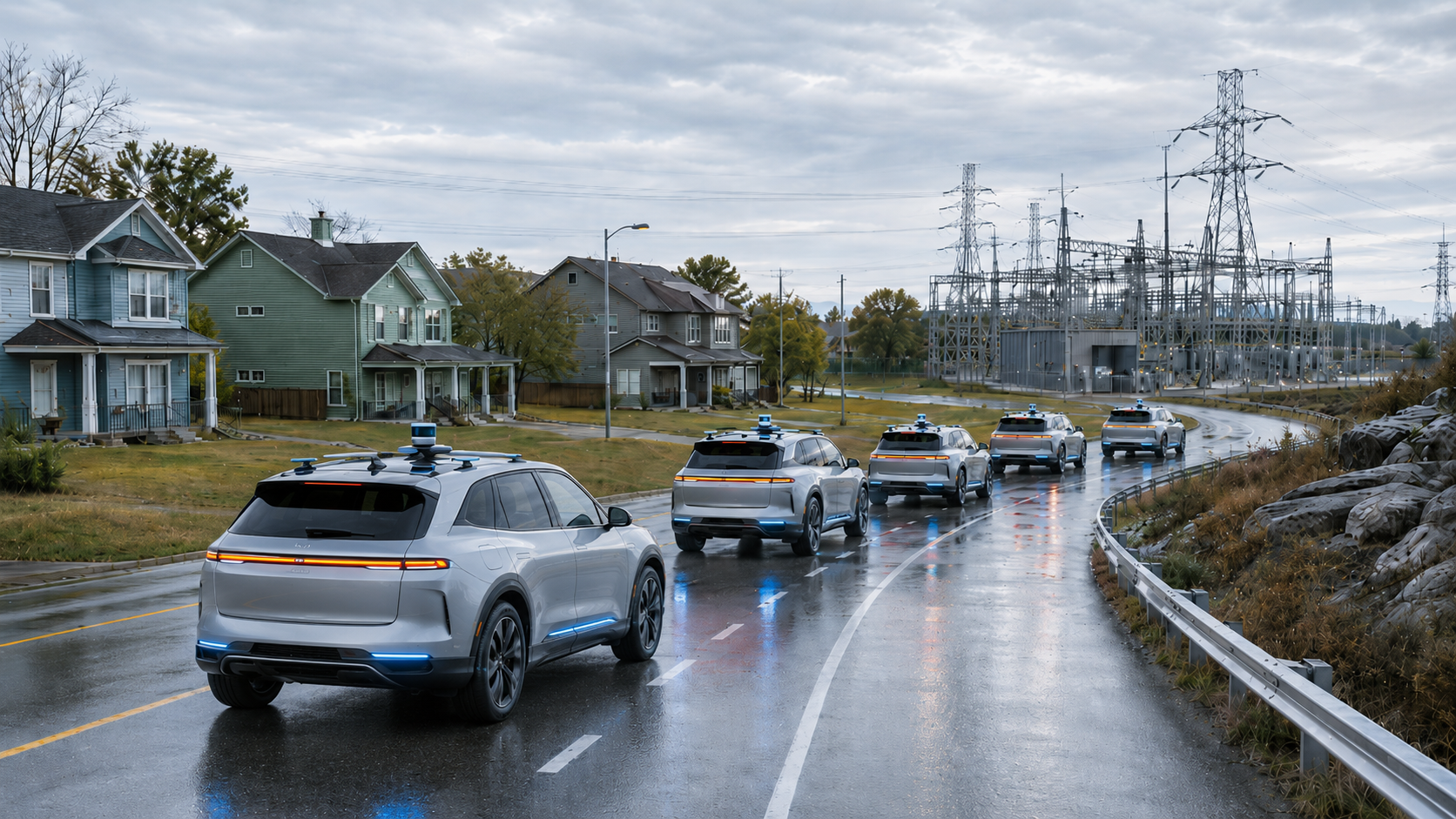
Consider a fleet of autonomous taxis that serves the morning commute but experiences lower passenger demand during the late afternoon. Instead of returning to a central parking facility, available vehicles could be dispatched to charging hubs in areas served by constrained substations or heavily loaded distribution circuits. A key advantage of this model is that dedicated bidirectional charging infrastructure could be strategically located where grid needs and system value are greatest, rather than relying only on where vehicles happen to be parked.
Once connected, the vehicles could respond to changing grid conditions by increasing charging when renewable generation is abundant, reducing or pausing charging during peak demand, or exporting electricity when additional capacity is needed. A utility or aggregator could coordinate hundreds of vehicles as a virtual power plant while maintaining sufficient battery capacity for their next transportation assignments.
This adds an important geographic dimension to V2G. The value would come not only from when vehicles charge and discharge, but also from where they connect. Autonomous EVs could become self-positioning distributed energy resources that move between locations as grid conditions change.
Supporting Communities During Outages
The convergence of autonomy and bidirectional charging could be especially valuable during emergencies. Autonomous EVs could be dispatched to designated resilience hubs near substations, emergency shelters, hospitals, fire stations or neighborhood microgrids.
Connected through banks of bidirectional chargers, the vehicles could provide temporary power until utility service is restored. A single passenger EV could not power an entire neighborhood for long, but a coordinated fleet could provide several megawatt-hours of mobile energy capacity. Vehicles could rotate through the affected area, traveling to unaffected locations to recharge before returning with additional energy.
Larger autonomous vans, trucks, and buses could contribute substantially more power than passenger vehicles. With enough vehicles connected through high-capacity bidirectional chargers, a fleet could supply several megawatts, potentially enough to energize an isolated distribution circuit or restore selected loads normally served by a substation. The vehicles would not power the substation itself; instead, utility switching and protection systems would isolate a safe section of the grid and allow the fleet to serve homes, businesses, emergency shelters, communications equipment, and other priority loads within that area.
California’s Public Safety Power Shutoffs illustrate one potential use. During periods of extreme wind and wildfire danger, utilities intentionally de-energize selected power lines to reduce the risk of electrical equipment igniting a fire. Mobile V2G fleets could be pre-positioned at substations, community microgrids, or critical facilities before a shutoff and dispatched as conditions change. Vehicles could rotate out to recharge in unaffected areas while replacement vehicles maintain service.
These fleets would not replace permanent grid infrastructure, stationary batteries, or utility repair crews. They would provide another flexible emergency resource that could be rapidly repositioned as wildfires, storms, or other disruptions move across a service territory.
A New Utility Business Model
This convergence could create a promising new business model. Utilities already invest in substations, distribution upgrades, stationary batteries, demand-response programs and mobile generators to maintain reliability. Autonomous, bidirectional fleets could eventually become another tool in the utility toolkit.
A utility might own a limited fleet, contract with a mobility company for guaranteed capacity or compensate an aggregator for making vehicles available at specified locations and times. Payments could reflect availability, energy delivered, capacity provided and performance during emergencies.
Where utility investments in vehicles, charging hubs or control platforms produce measurable reliability and system-cost benefits, the costs could potentially be recovered through the rate base. Such investments would need to satisfy regulatory review and demonstrate that they are prudent, cost-effective and beneficial to customers. Regulators would also need to consider competitive concerns and determine when utility ownership is preferable to procuring services from private providers.
From Concept to Commercial Opportunity
Important barriers remain. Autonomous vehicles must become more widely available, and bidirectional systems need simpler interconnection processes, common standards and dependable compensation. Fleet operators will need software capable of balancing passenger demand, battery condition, charging costs, grid needs and vehicle availability.
Cybersecurity and operational control will also be critical because these fleets would participate in both transportation and electric infrastructure.
Nevertheless, the opportunity is compelling. Autonomous EVs could eventually earn revenue from moving passengers and freight, managing electricity demand, supplying grid capacity and supporting communities during emergencies. That would transform the EV from a parked battery into a mobile, dispatchable and potentially valuable grid asset.
