April 14, 2026
The long term promise of vehicle-to-grid has always rested on scale. And nowhere is the scale larger than in the residential sector.
Electric vehicles are parked at home for the majority of the day and, critically, often during the evening peak when electricity demand is highest. Increasingly, many drivers charge at work or during midday hours when solar production is abundant. That creates a powerful dynamic: vehicles can absorb low-cost, low-carbon energy during solar hours and discharge during evening peaks when the grid is most stressed.
But the real story is not just timing. It is the scale of storage capacity in EV fleets.
A typical home battery system, such as the Tesla Powerwall, provides 13.5 kWh of usable storage. By contrast, most modern EVs carry between 60 and 100 kWh of battery capacity. A Tesla Model Y contains roughly 75 kWh. A Ford F-150 Lightning can carry as much as 131 kWh in its extended range configuration.
Put differently, a single 75 kWh EV holds the equivalent of more than five Powerwall units. A long-range electric pickup can approach the equivalent of ten.
Not all of that energy is available for grid services. Mobility comes first. Drivers will maintain reserve margins, and aggregators will likely dispatch only a portion of capacity. But even if just 20 to 30 percent of a 75 kWh battery were made available during peak periods, that still equates to roughly one to two Powerwall units worth of flexible storage per participating EV.
Now multiply that across hundreds of thousands or millions of vehicles.
The battery capacity embedded in the light-duty EV fleet already rivals, and will soon dwarf, installed residential stationary storage. The economic logic is compelling. Households are purchasing EV batteries for transportation. Residential V2G offers a pathway to extract additional system value from an asset that already sits in the driveway.
That is the strategic opportunity. And it explains why the evolution of residential bidirectional charging hardware matters.
A Short History of Bidirectional Chargers
Commercial bidirectional charging efforts predate residential offerings in the U.S. The earliest bidirectional chargers were designed around three-phase power, which is standard in commercial facilities but largely absent in residential neighborhoods in the U.S. As a result, fleets and commercial sites became the natural proving ground for first-generation bidirectional charging equipment.
Products such as Fermata Energy’s FE-15 and second-generation FE-20 were among the first to demonstrate three-phase DC bidirectional charging for light-duty fleets. These systems showed that EVs could reliably discharge power to buildings, enabling both energy cost management and participation in utility demand response programs.
A key enabler of these early deployments was the CHAdeMO connector standard, developed in Japan, which was designed from the outset to support bidirectional power flow. At a time when most charging infrastructure was strictly one directional, CHAdeMO provided a critical technical foundation for real world V2G applications.
When paired with the Nissan Leaf, one of the first mass market EVs equipped with a CHAdeMO port to enable bidirectional operation, Fermata Energy deployed dozens of systems across the United States. These were not theoretical pilots. They produced real-world operating data, validated interconnection pathways, and demonstrated that EV batteries could reliably dispatch energy to buildings and the grid.
Rhombus Energy Solutions, acquired by BorgWarner in 2022, was the first company to bring commercial high-power DC bidirectional chargers to the medium and heavy-duty sector. Its 60 kW and 125 kW systems were designed for large battery platforms that required both fast charging capability and the ability to export meaningful power back to the grid.
Most of the earliest school bus V2G deployments relied on Rhombus Energy Solutions equipment. These systems utilized CCS (Combined Charging System), which was not originally designed for bidirectional power transfer. This created integration challenges across vehicles, chargers, and control systems, contributing to operational and reliability issues observed in early deployments. While these projects were instrumental in demonstrating the technical feasibility of high-power bidirectional charging, reports from the field highlighted persistent challenges. Following the Rhombus Energy Solutions acquisition, BorgWarner ultimately exited the DC charging hardware business and closed the Rhombus product line.
The market has since evolved. Several companies now offer high-power DC bidirectional chargers for commercial and fleet applications, including Tellus Power, Heliox, and InCharge Energy. This reflects continued momentum in the medium and heavy-duty V2G segment, anchored by the strong school bus use case.
The Evolution of Resi Bidirectional Chargers: From V2H to V2G
The first commercially available bidirectional charging products for residential use were for vehicle-to-home (V2H) applications, allowing EV owners to power their homes during outages. Ford Motor Company was first to market in 2022 with its Home Integration System, co-developed with Sunrun. These systems provided AC charging and enabled export of DC power from the EV battery, which was then converted to AC power for use in the home under single-phase service during an outage.
Also in 2022, General Motors outlined a plan to integrate its EVs with its Ultium Home Energy System to enable V2H backup power capability. Chevrolet’s V2H offering became commercially available in late 2023. Unlike Ford, which limits its V2H offering to the F 150 Lightning, GM has expanded V2H capabilities across multiple EV models, including the Chevrolet Silverado, GMC Sierra, Chevrolet Blazer, and Chevrolet Equinox, when paired with the GM Energy V2H bundle, which includes the GM Energy PowerShift Charger and the GM Energy V2H Enablement Kit.
In 2023, Tesla introduced PowerShare, enabling its Cybertruck to provide home backup power when paired with Tesla’s Universal Wall Connector and home integration equipment. Tesla indicated the system could deliver up to 11.5 kW of continuous power during an outage.
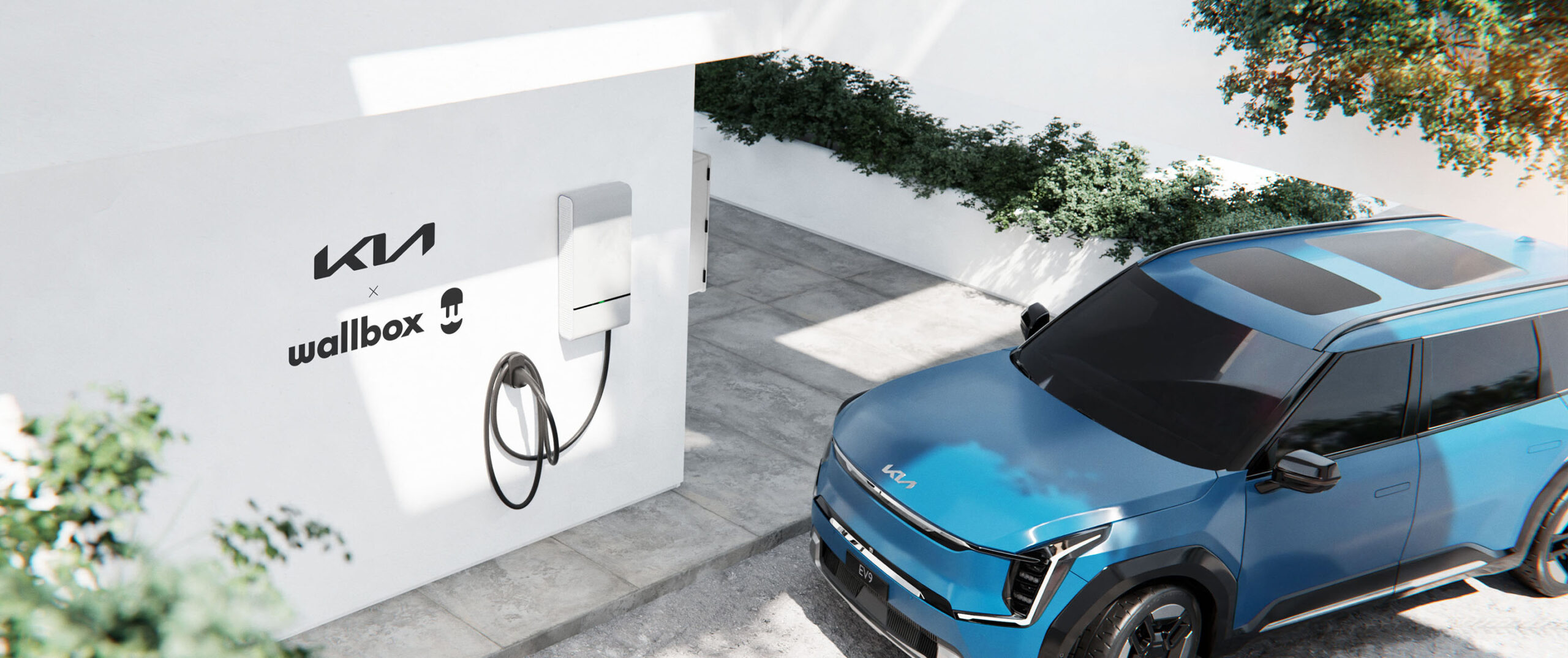
Wallbox’s Quasar 2 represents one of the first commercially available bidirectional chargers in the U.S. from a non-vehicle OEM to deliver full V2G capability. Its launch introduced a new class of single-phase, low-power DC chargers designed specifically for residential applications. Supporting both V2H and V2G functionality, the Quasar 2 marks an important step in expanding bidirectional charging beyond automaker-led solutions. The system provides up to approximately 12 kW of charging and discharging capacity. Its initial vehicle pairing was with the Kia EV9. Additional products (see next section) are coming to market, such as dcbel’s Ara home energy station, which integrates EV charging with solar and stationary battery storage into a unified home energy platform.
Most residential offerings in the U.S. have relied on DC-based architectures, where the grid-interactive inverter, which converts DC power from the EV into AC power for buildings and the grid, is located in the charger itself. This approach has enabled early deployments but has also contributed to higher costs and more complex installations. At the same time, a new wave of AC bidirectional solutions is emerging, leveraging grid-interactive inverter capabilities on board the vehicle. These solutions are gaining traction in Europe and are starting to appear in the U.S., led by Tesla PowerShare systems mentioned above. With the UL 1741 SC standard for AC bidirectional charging nearing completion, and with some jurisdictions already approving interconnection using chargers and vehicles certified to UL 1741 SB as a combined distributed energy resources (DER) system, the regulatory foundation for AC-based V2G is beginning to take shape. These pathways point toward a simpler, more standardized approach over time.
A critical technical and operational challenge across both V2G DC and AC approaches is managing the transition between grid-connected operation and islanded backup mode. Systems that support both V2H and V2G must safely disconnect from the grid during an outage, establish a stable power source for the home, and then seamlessly reconnect when grid power returns. This mode-switching process requires coordination across the charger, vehicle, transfer equipment, and the home’s electrical system, and has been a key source of complexity in early deployments. As the market evolves, simplifying and standardizing this transition will be essential to delivering a reliable and scalable residential bidirectional charging experience, an area addressed by UL through the development of UL 1741 CRD Multimode certification.
What’s In Market Today (and Coming Soon)
The residential bidirectional charging market is still in its early stages, but a clear set of products is beginning to take shape. Early offerings are tightly coupled to specific vehicles and focused primarily on backup power. Today, a broader mix of standalone chargers, integrated home energy systems, and software-enabled platforms is emerging, expanding functionality from V2H into V2G and full V2X applications.
At a high level, the market can be understood as a mix of DC-based systems, which currently dominate early deployments in the U.S., and emerging AC-based approaches that may enable simpler and lower-cost installations over time. Across both approaches, most products are converging on a common value proposition: combining backup power, grid services, and smart energy management into a single residential platform.
Below is a snapshot of the residential bidirectional charging products either available today or expected to reach the market in the near term.
| Product | Type | V2H(backup) | V2G | Status |
| Wallbox Quasar 2 | DC | ✓ | ✓ | Marketed in the U.S. for Kia EV9 pairing (expanding to additional models), with home backup and grid export features. |
| Autel MaxiCharger V2X | AC | ✓ | ✓ | Autel announced at CES 2026 that the home focused MaxiCharger AC Compact Gen 2 will be V2G capable. Availability TBD. |
| Ford Charge Station Pro + Home Integration System | DC | ✓ | ✓ | Available for F 150 Lightning home backup; Ford enabled V2G in select markets with utility programs. |
| Enphase IQ Bidirectional EV Charger | DC | ✓ | ✓ | Public product page is live; launch is expected in late 2026, with Black Start and seamless V2H/V2G switching. |
| Tesla PowerShare (Cybertruck) | AC | ✓ | ✓ | Live today for home backup; Tesla also describes “Grid Support,” but export depends on local program and interconnection rules. |
| GM Energy PowerShift Charger + V2H Enablement Kit | DC | ✓ | _ | Commercially sold for backup power from all GM EVs; current positioning is V2H, no public V2G announcement. |
| dcbel Ara Home Energy Station | DC | ✓ | ✓ | Ara Home Energy Station by dcbel with limited availability in select markets for both home backup and grid programs. |
| Ambibox ambiCHARGE Home | DC | ✓ | ✓ | Official site and datasheet are live; positioned for V2H and V2G with reservation language rather than broad mass market rollout. |
| Sigenergy Sigen EV DC Charging Module / SigenStor | DC | ✓ | ✓ | V2H and V2G available worldwide through its DC charging module integrated with SigenStor. |
| StarCharge Halo | DC | ✓ | _ | 7.4 kW and 11 kW residential Halo units for V2G; V2H capability is not clearly stated on current product pages. |
| Emporia V2X Bi Directional Charger | TBD | ✓ | ✓ | Emporia “coming soon” page, stating 2027 target release. |
The table above is not intended to be an exhaustive list and is based on publicly available product pages, company announcements, and industry disclosures, and therefore includes a mix of commercially available products and those that have been announced but are not yet widely deployed. Some products, including those listed here and others, may already be available in international markets such as Europe or Australia. By contrast, the California Public Utilities Commission maintains a more restrictive list of eligible equipment through the Vehicle-to-Grid Equipment List (V2GEL), developed to support vehicle-grid integration in the state. This list includes only products that are commercially available and meet the necessary UL standards for interconnection in California. At present, that list is limited to just two residential bidirectional chargers: dcbel’s Ara and the Wallbox Quasar 2.
Conclusion: Early Days with Rapid Innovation
The residential bidirectional charger market is still in its infancy, but momentum is building quickly. We are moving beyond early V2H and pilot V2G offerings toward a new wave of products that combine energy backup, grid services, and smart home energy management. As more EVs come to market that support bidirectional flows, and as states and utilities establish clearer interconnection pathways, residential bidirectional charging is poised to transition from niche to more widespread adoption.
Looking ahead, both DC and AC architectures are likely to play a role. Lower-cost AC bidirectional solutions may enable broader adoption over time, while the current generation of low-power DC bidirectional chargers is expected to remain an important and commercially available pathway for residential V2G, particularly where tighter control and established interconnection approaches are valued.
