Welcome to the final edition of V2G News for 2025! 🎉 ✨ 🥂
It’s been an extraordinary year for bidirectional charging, one where V2G shifted from the edges of the conversation to a central pillar of how we think about grid reliability, customer value, and the future of electrification. In this issue, I’m stepping out with my predictions for 2026: where the technology is headed, how fast adoption will accelerate, and why the coming year may mark a true inflection point for the industry.
As we wrap up the year, I want to wish you all a wonderful holiday season and to offer my sincere appreciation for your interest, support, and engagement. This community is growing quickly, and it’s your curiosity and commitment that make V2G News worth producing. Stay tuned, because 2026 is shaping up to be a remarkable year for V2G and bidirectional charging, and I’ll be here to help make sense of it every step of the way.


V2G Insights
Steve’s 2026 V2G Predictions: The Year Bidirectional Charging Reshapes the Grid
December 16, 2025
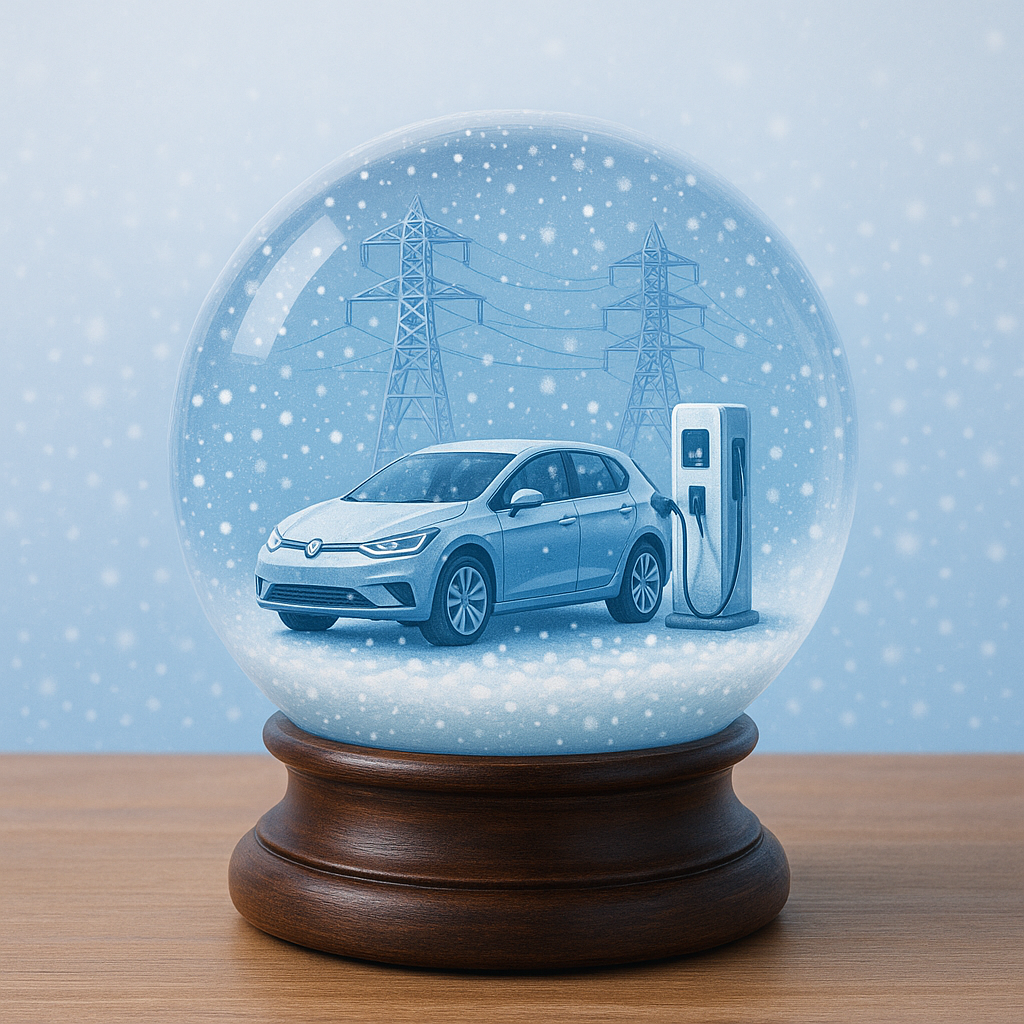
Predictions are always fraught; technology shifts, policy windows open and close, and market signals rarely move in straight lines. But part of building a forward-leaning bidirectional charging ecosystem is being willing to look ahead, acknowledge the uncertainty, and still offer a view of where things are headed.
So with equal parts humility and conviction, I’m stepping out with a set of bold projections for bidirectional charging in 2026. These aren’t certainties; they’re informed expectations shaped by decades of work in this space and a close read of where policy, standards, and industry commitments are converging. My goal is simple: to spark conversation, test assumptions, and help us collectively anticipate the opportunities and obstacles that will define the next phase of bidirectional charging.
Introduction
If 2025 showed that bidirectional charging can scale, 2026 will show that the grid simply cannot succeed without it. Utilities are already straining under rapidly rising loads, regulators are scrambling to keep rates from climbing, and after years of fragmentation, the technology ecosystem is finally aligning. Bidirectional charging and V2G are no longer fringe innovations; they are becoming foundational to the reliability and affordability of the modern grid.
The most striking shift heading into 2026 is psychological rather than technical: the conversation is no longer about whether bidirectional charging and vehicle-to-everything (V2X) are viable. It’s about how quickly industry, utilities, and regulators can clear the remaining barriers, because the grid flexibility these technologies offer is becoming essential, not optional.
As we close out 2025, here are my top projections for the coming year. Taken together, they point to one conclusion: 2026 will be the inflection point where V2G becomes a mainstream grid resource, and the early adopters gain an undeniable strategic advantage.
V2G Intelligence
Closing Out the Year with Two Key Reports Shaping the Future of Bidirectional Charging and V2G
December 16, 2025
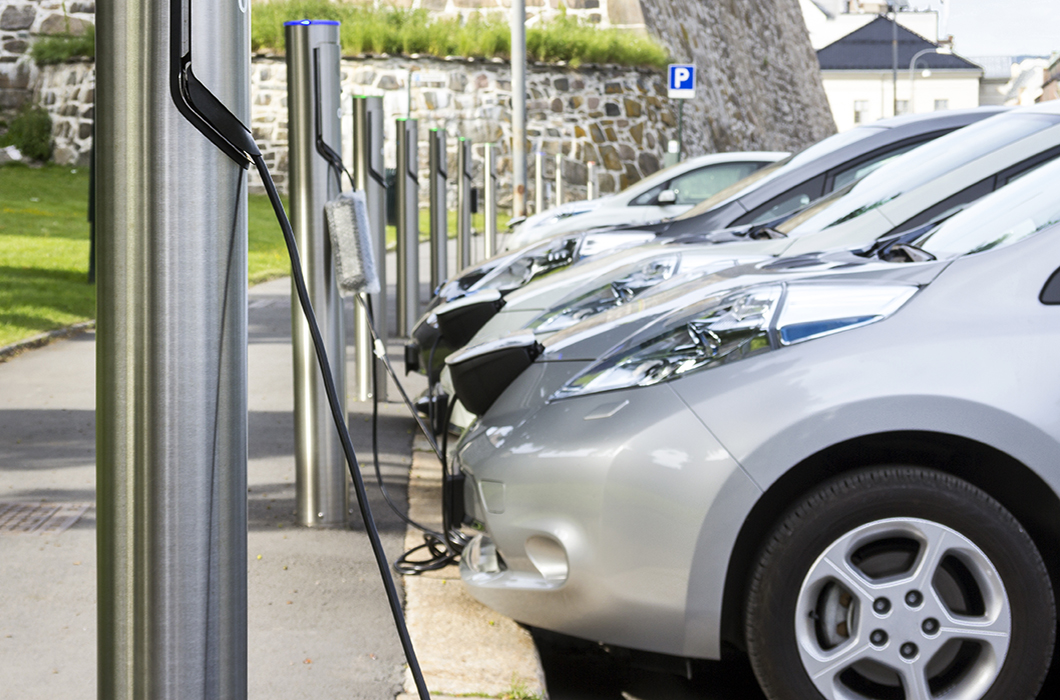
As we wrap up 2025, two major reports offer some of the clearest signals yet about where vehicle-to-grid (V2G) is heading in the coming years. One comes from Massachusetts’ Electric Vehicle Infrastructure Coordinating Council (EVICC), which has evolved into one of the most thoughtful and data-driven state bodies planning for the EV–grid future. The other is a national market study focused on the round-trip efficiency (RTE) of bidirectional charging systems. This underexamined but crucial topic defines the technical and economic viability of bidirectional charging. Together, these reports illuminate both the policy readiness and the technology performance questions that will shape V2G’s trajectory over the next several years.
Massachusetts Steps Forward: EVICC’s Second Assessment
When Massachusetts created EVICC under the 2022 Climate Act, the original mandate was straightforward: build a roadmap for charging deployment and identify barriers to meeting the Commonwealth’s electrification goals. Two years later, the Council’s work has matured into something deeper. EVICC is no longer simply mapping where chargers must go; it is assessing how charging interacts with the grid, how managed charging can reduce system costs, and how bidirectional technologies fit into long-term strategies for resilience and affordability.
The Second Assessment reflects this evolution. Modeling from Synapse Energy Economics, Resource Systems Group (RSG), and the Center for Sustainable Energy (CSE) shows that the state is thinking in integrated terms, asking not just how many chargers Massachusetts needs, but how they should behave and how EV loads should be shaped so that infrastructure upgrades are targeted, not reactive. This perspective puts vehicle-grid integration (VGI) at the center of the electrification strategy, rather than treating it as an add-on.
A National Look at Performance: The V2X Round-Trip Efficiency Study
V2X Round-Trip Efficiency Market Study: Final Report, ET25SWE0028 (December 2025)
While the EVICC assessment shows how a state is preparing for bidirectional charging, the V2X Round-Trip Efficiency Market Study tackles a very different challenge: understanding how efficiently energy moves through bidirectional systems. This is not academic. Round-trip efficiency (RTE) determines how much energy is lost during a charge–discharge cycle and therefore affects customer economics, program design, avoided cost modeling, and grid-level forecasting. It is surprising how little consensus the industry has had on this topic until now.
V2G Finds—US
New Nature Energy Study Shows V2H Can Cut Household Emissions and EV Charging Costs by More Than Half
A new Nature Energy study from the University of Michigan and Ford offers one of the clearest quantitative assessments to date of vehicle-to-home (V2H) value, and the results are striking. By smart-charging when grid electricity is cleanest and using the vehicle battery to power the home during dirtier, more expensive hours, households across much of the U.S. could cut lifetime charging costs by 40–90% and reduce electricity-related emissions by 70–250%. In regions like Texas and California, the savings can be so large that V2H effectively “pays for” the electricity used to drive the vehicle. While V2H is still early and not yet fully plug-and-play, the research underscores a fundamental point for the emerging V2X market: parked EVs are not just transportation assets; they’re potentially one of the most cost-effective and widely distributed storage resources in the country.
December 14, 2025
PG&E’s $4,500 Home Battery Rebate Shows How Utilities Are Using V2X to Advance DER Goals
PG&E’s new incentive, offering GM Energy customers up to $4,500 toward home battery systems, is one of the clearest examples yet of a utility using V2H and V2G-ready technology to advance broader distributed energy goals. Building on a successful V2H pilot launched with GM earlier this year, PG&E is now treating home batteries and bidirectional EVs as complementary assets that can strengthen resilience, reduce peak demand, and help the utility meet state clean-energy and storage targets. As more states adopt ambitious DER policies, programs like this point to a growing recognition that customer-sited flexibility, whether through stationary batteries or EVs capable of powering homes, will be essential to grid reliability and decarbonization.
December 8, 2025
Washington State Launches First V2G School Bus
Washington State just activated its first V2G-enabled school bus fleets, a small but telling milestone that reinforces one of my key predictions for 2026: school buses will become the earliest, most scalable proving ground for bidirectional charging in the U.S. Puget Sound Energy has installed five Nuvve V2G fast chargers across the Olympia and Snoqualmie Valley districts, allowing buses to discharge during peak hours and provide backup power during emergencies, turning routine fleet downtime into real grid value. The structure here is exactly what we’re seeing nationwide: utility investment, state support, predictable fleet schedules, and technology that’s finally mature enough to move beyond pilots. Washington’s deployment is modest in size but significant in what it signals. School bus electrification is no longer just about cleaner rides for kids; it’s becoming a backbone resource in emerging V2G markets heading into 2026.
12/6/2025
V2G Finds—Global
New Market Forecast Puts EV Charging on an $8B Trajectory wth V2G as a Core Growth Driver
A new global forecast from Research & Markets projects the EV charging management software market to surge from $1.7 billion in 2024 to $8 billion by 2030, driven by rapid electrification, the scaling of networked chargers, and the shift toward AI-enabled optimization. While the headline number is aggressive, the underlying trend is unmistakable: the value in EV charging is migrating from hardware to software, where fleet management, grid coordination, and customer services converge. That this analysis explicitly identifies vehicle-to-grid capabilities as a growth accelerator is particularly noteworthy, signaling that V2G is entering mainstream market models rather than living on the margins of specialized energy forecasts.
For V2G News readers, the takeaway is straightforward. As utilities, automakers, and aggregators increasingly rely on software to manage charging behavior, integrate renewables, and unlock grid services, the competitive landscape will hinge on platforms capable of orchestrating both unidirectional and bidirectional resources. Whether the market hits $8B or lands somewhere lower, the direction of travel is clear: the software layer, especially tools capable of managing V2G interactions, is becoming the economic center of gravity in the EV ecosystem heading into 2026.
December 10, 2025
Australia Launches National V2G Network, Showing How Collaboration Can Accelerate a Market
Australia’s new Vehicle-Grid Network (VGN) is one of the most coordinated national efforts we’ve seen to accelerate V2G deployment, and a model for how collaboration can move an emerging technology from scattered pilots to shared momentum. Backed by ARENA and led by Climate-KIC Australia and UTS, the VGN brings together automakers, utilities, charging providers, regulators, and researchers to tackle the barriers no single actor can solve alone: interoperability, connection pathways, customer confidence, and clear market signals. By creating a structured national forum that aligns technical work, standards development, and policy priorities, Australia is positioning itself as a potential global leader in V2G, proof that when the full ecosystem works together, bidirectional charging can scale faster, more consistently, and with far less friction.
December 12, 2025
Europe Pushes V2G Into the Medium-Duty Segment with Stellantis’ E-Expert Launch
Stellantis’ announcement at Solutrans 2025 that the Peugeot E-Expert will launch in France in Q2 2026 with factory-integrated V2G capability is a notable signal that Europe is moving bidirectional charging beyond light-duty cars and into the commercial medium-duty segment. Supported by the EU-funded EVVE project and paired with EDF subsidiary DREEV for energy services, this is one of the first turnkey V2G offerings designed specifically for work vans, vehicles with predictable routes, depot charging, and battery capacity well-suited for grid support. By embedding V2G readiness directly in production, alongside Stellantis’ Custom-Fit factory upgrade program, the company is removing integration friction for fleets and edging the market toward a moment where commercial vans become meaningful grid assets rather than pilot curiosities.
12/8/2025
Cornerstone–Tellus Partnership Signals Major Step for V2G Expansion in Asia
Cornerstone Technologies’ new cooperation agreement with Tellus Power is more than a hardware-supply partnership; it’s a meaningful signal for the Asian V2G landscape. As one of Hong Kong’s leading charging-network developers, Cornerstone is uniquely positioned to shape the region’s next wave of smart-charging and fleet electrification. The companies plan to jointly explore V2G applications and even energy-asset tokenization, an emerging digital model that could unlock new revenue streams for grid services. With charging networks in Hong Kong, Thailand, and Southeast Asia poised for rapid expansion, Cornerstone’s strategic move suggests that V2G could become embedded into the region’s infrastructure build-out rather than added later, a potential leapfrog moment as Asia’s V2G market accelerates heading into 2026.
12/10/2025
