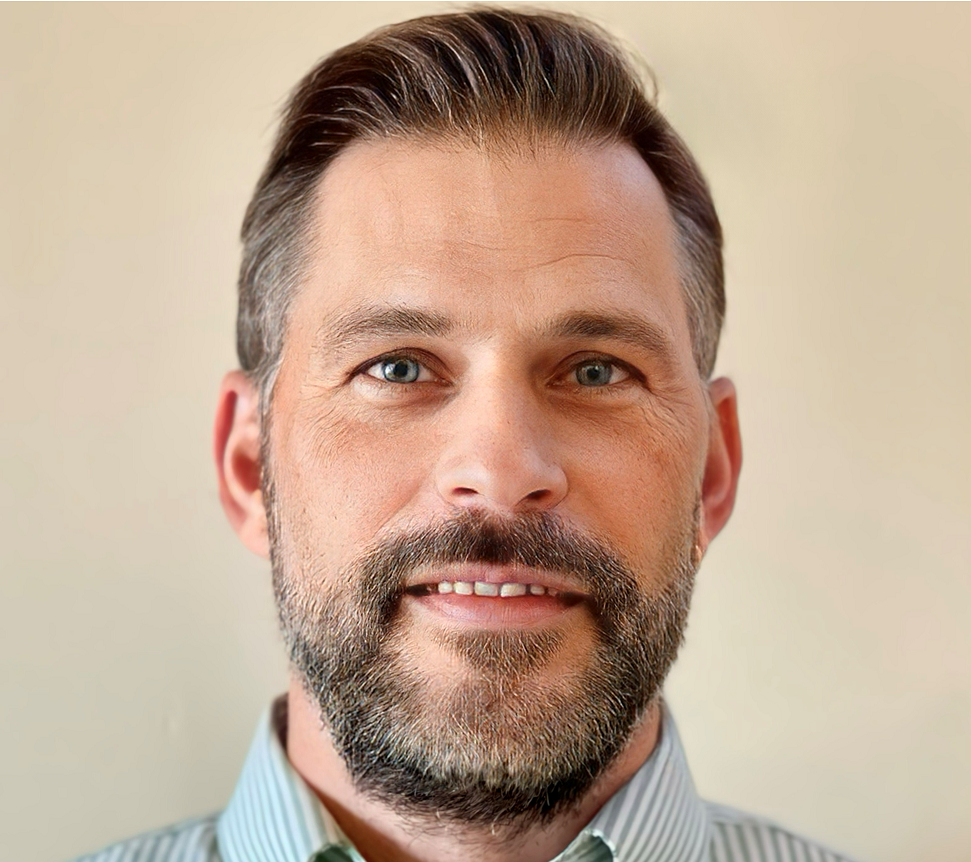
Vincent Weyl, California Energy Commission, Vehicle-Grid Integration Principal
Electric vehicles are no longer just a transportation story. In California, they are increasingly being viewed as a flexible energy resource with the potential to reshape how the grid operates. But turning that potential into real world value is not straightforward.
To better understand how this transition is unfolding, we spoke with Vincent Weyl. In the discussion that follows, he outlines how the California Energy Commission is advancing bidirectional charging, what the agency is learning from early deployments, and where the biggest opportunities and challenges lie ahead.
V2G News:
To start, could you describe your academic and professional background?
Weyl:
I currently serve as a Vehicle Grid Integration (VGI) Principal in the California Energy Commission’s Fuels and Transportation Division. Prior to that, I spent close to 10 years in the clean technology sector, 8 of which were in the electric mobility space. I was also involved in CharIN, serving as a co-chair on their North American policy committee.
Before that, my career was in telecommunications, almost since the advent of the Internet and the explosion of cellular networks.
My academic background is in electronics engineering with a major in computer networking.
V2G News:
Please describe your role and responsibilities at the CEC?
Weyl:
As a VGI Principal, I act as a subject matter expert on all things related to the integration of EVs with the electric grid. That includes how EVs charge and discharge in a manner that offers the best driver experience and the most benefit to the electrical infrastructure, at local and grid levels. My job is to inform CEC actions supporting the state’s ZEV and clean energy goals, including grant funding opportunities, regulatory proceedings, and general policy goals and CEC positions.
V2G News:
How did you first get interested in the topic of vehicle-grid integration?
Weyl:
I was a Director of Marketing at Nokia, where I was in charge of developing ecosystem collaborations on Internet of Things applications, focusing on the Transportation, Utilities, and Smart Cities segments. EV charging infrastructure was at the nexus of these segments, and I was able to learn from the different perspectives of a diverse set of stakeholders. In 2017, I joined a startup in San Diego that specialized in distributed energy resources. On my first day in the job, I inherited an RFP from PG&E for their EV Charge Network program. I dug in and from then on became involved in VGI and participated in the various state proceedings both at the CPUC and CEC.
V2G News:
Can you describe where bidirectional charging efforts sit within the CEC organization, and approximately how many staff are working in this area?
Weyl:
VGI is an effort that crosses organization boundaries, and affects the Energy Assessment (EAD), Energy Research and Development (ERDD), and Fuels and Transportation (FTD) divisions, but also to a certain extent other divisions across the CEC.
For example, EAD includes contributions of VGI to the different energy forecasts and assessments CEC is tasked with developing. Multiple staff members are involved in producing and reviewing the analyses and reports that feature V2X content.
ERDD is managing over 12 Electric Program Investment Charge Program (EPIC) grant projects specifically related to bidirectional charging and many more if you extend to the full spectrum of VGI. Each of these projects was evaluated (alongside other project applications that weren’t awarded) by a pool of staff experts (often representing different divisions) and is currently managed by a dedicated CAM.
FTD has a dedicated VGI unit leading on the topic, but is also overseeing multiple other grants in other units that involve bidirectional charging and VGI considerations. The Zero Emission School Bus Initiative (ZESBI) is a good example, as grant funds are only disbursed for bidirectional-capable charging equipment.
At a recent business meeting, Vice Chair Siva Gunda reiterated the critical importance of bidirectional charging for the CEC and how it involves the entire agency.
V2G News:
The CEC has been supporting numerous programs to advance bidirectional charging. Can you please provide a high-level overview of these various efforts, including a timeline.
Weyl:
The CEC has multiple levers to advance specific policy. For example, bidirectional charging: regulatory authority, funding programs, and thought leadership (from extensive technology and modeling expertise). In layman’s terms, I like to say that the CEC can recommend, pay for, or mandate by law (provided legislative authority exists) certain technologies and behaviors.
In the case of bidirectional charging, all three levers are being deployed.
We have funded bidirectional projects for many years. In fact, more than 200 bidirectional chargers have been deployed using CEC funds since 2021. There are 12 ongoing bidirectional R&D projects funded by EPIC grants. I mentioned the ZESBI initiative earlier, which is currently ongoing, as is another grant program called REDWDS, which funds bidirectional charging. In the latter grant, 4 out of 10 projects are deploying bidirectional chargers as we speak (and we are learning a lot in the process).
From a thought leadership perspective, I also already mentioned assessments and reports that include VGI modeling, including a recent paper proposing a roadmap to unlock bidirectional charging. But we are doing much more. Staff is actively participating in working groups and advancing emerging standards. We maintain a V2G Equipment List, which serves as the reference for what equipment is currently available that meets the required standards and certifications for deployment in the state. We are funding an interoperability lab (Charge Yard), which will launch later this year, and will be capable of testing end-to-end bidirectional charging in both a grid-simulated environment and in a real interconnection setting with the Sacramento Municipal Utility District (SMUD).
From a regulatory perspective, there is currently no mandate that either EVs or EV charging equipment be bidirectional-capable. But there is a developing legislative framework that would authorize state agencies to adopt and implement standards under certain conditions and timelines. Regulations are a very powerful tool to shape an industry, but one that requires extra care and time to implement.
You asked about timeline. When you look at the readiness of EV drivers (who are worried about affordability – range and charging anxiety are no longer major concerns) and the momentum among EV OEMs (with many bidirectional-capable models now on offer), there is an opportunity to make an impact today and develop meaningful bidirectional and VGI adoption by focusing on driver experience and interoperability, which we can largely advance through industry collaboration (pending potential future funding or regulation).
V2G News:
The recent report, A Roadmap to Unlocking the Benefits of Bidirectional Charging, notes that California’s EV fleet already represents roughly 18.5 gigawatts of potential storage capacity, exceeding the capacity of stationary storage in the state. How should policymakers and utilities think about that potential in practice? In particular, how do you see the role of managed charging relative to bidirectional charging in unlocking EV flexibility for the grid?
Weyl:
This is a million-dollar question, and one I have been asked before! My first response is that the CEC is here to provide the public with reliable assessments and set policies that are in the scope of our mission.
What I can tell you is that within the CEC, our thinking and our actions have evolved. We had a VGI roadmap as early as 2014. We have studied and modeled it. Extensively. The keyword in your question is “practice”. We needed to learn by doing. All these projects, REDWDS early deployments, findings from unidirectional charging infrastructure deployments, interactions with stakeholders, end-users, and installers, give us a much better understanding of practical barriers and where the CEC can help. We want to answer this question for all: how can we make bidirectional work in practice?
Once we answer this, then maybe the general thinking will evolve from potential to existing capability, ready to be “harvested” and that could change the mindset and priorities of many actors.
To answer the second part of your question, I would caution against considering “managed charging” and “bidirectional charging” to be separate things. I understand how it can be accounted for differently when looking at grid contributions and numbers. But in the end, it’s the same vehicle, connected to the same grid through some equipment, that may charge or discharge depending on the user’s needs, grid needs, and equipment capabilities. Both the acts of charging and discharging can be beneficial to the EV owner and the grid, and both need to be managed through the right set of signals and technology to optimize convenience and outcome.
V2G News:
A recent V2G News article argues that California has been a national leader in EV adoption and in exploring the potential of EVs as grid resources, yet bidirectional charging deployments remain relatively limited. From your perspective at the CEC, what explains the gap between California’s policy ambition and real-world deployment?
Weyl:
I will start by saying I don’t necessarily see a gap between the state’s ambition and deployments as they are today.
We have stated goals for 100% clean energy (2045), and for 100% ZEV sales (2035 for light-duty, 2045 for medium and heavy-duty) with intermediate targets (including 5 million ZEVs by 2030). None of these goals is out of reach as we speak. None of these goals is a walk in the park either, which is why there is so much happening in the legislature and state agencies.
With regards to bidirectional specifically, we currently have no specific stated ambition or goal. Which is why the bidirectional charging paper and other modeling works talk about potential and opportunity.
I drew the parallel with smartphones because I believe the added capabilities and applications of EVs could help drive ZEV adoption and potentially replace the loss of direct incentives. I also believe it can help certain homeowners in the short-term deal with energy affordability.
But this falls short of setting a bidirectional goal or enacting a specific policy, as questions remain, particularly an impact analysis of massive adoption.
V2G News:
One of the most interesting conclusions in the roadmap is the emphasis on vehicle-to-home (V2H) as a near-term pathway that avoids some of the barriers associated with exporting power to the grid. Do you see V2H primarily as a stepping stone toward V2G, and what are the limitations of V2H relative to V2G?
Weyl:
I would prefer qualifying V2H as a key and necessary step. For some end-users, discharging to a local infrastructure or battery might be the end of it, and they may never export energy to the grid. At the same time, you cannot enable V2G if you do not solve the connection to the local infrastructure first.
At scale, the end game is probably a meshed network of orchestrated distributed energy resources (including mobile batteries) that would maximize the benefits and outcomes for the EV owner and strengthen the state’s electricity supply for the benefit of all.
If I go back to the iPhone analogy, the limitations of V2H would be akin to using an iPhone without iCloud. It works well so long as you have enough local storage for your pictures, documents, apps, and local backup. And for many users, that is more than enough. But if you happen to need more storage, or if you need access to someone else’s data (pictures, documents, etc.), iCloud becomes a must and may open the door to additional use cases and benefits you didn’t think of.
It’s these types of use cases and benefits that should drive our vision of a grid of the future.
V2G News:
One of the structural challenges discussed in the CEC roadmap is the lack of clear compensation mechanisms for exporting energy from EVs to the grid. In your view, what kinds of market structures or rate designs would be needed to make bidirectional charging economically attractive to drivers and fleets?
Weyl:
Again, a pretty difficult question! If the CEC had an answer today, it would have made it into the paper😉 I will also add, as you know, that the CPUC has the final authority on electricity tariffs for the IOUs in our state.
And thank you as well for bringing up fleets – they play an important and growing part in the mix.
That said, if you look at the current rate structure, particularly TOU rates or demand charges, they generally make it quite attractive for drivers and fleet managers, through pretty significant monetary incentives, to discharge at certain times or in certain situations.
You can also throw in ELRP, which pays $2/kW.
We do see that these incentives work in changing behaviors, including through managed charging programs.
The tricky part, however, is to plan for evolution and for the impact at scale of behavioral and technology changes. We have seen what the addition of stationary storage has done to the duck curve in just five years. If, as the paper shows, 2.3 million EVs were to discharge during peak hours, that would have a huge impact, which might end up not being beneficial to the grid if it meant creating another peak, say at the end of the current peak price period. Similarly, if we were to replace TOU rates with dynamic rates, the price delta between hourly periods might not be enough to alter end-user behavior and trigger a discharge.
So, it is a difficult balance to strike, and one that we recognize will take time (just as it did for solar compensation). It’s also a moot point (for bidirectional, particularly) if we do not solve the other barriers, starting with how to enable it in practice
V2G News:
The CEC roadmap highlights that existing interconnection rules were designed for stationary generation and are not well-suited for mobile resources like electric vehicles. What kinds of regulatory or technical innovations will be needed to make interconnection practical for millions of bidirectional vehicles in the coming decade?
Weyl:
Same comment as before here. We want to recognize the CPUC’s authority and leadership on interconnection proceedings. The good news is that they are well underway for EVs and I am quite confident that the technical innovations and requirements will be ironed out.
Again, the keyword is practical. Once the technical part is fixed, we need to address the process part – how do you get interconnection? – and make sure it scales and is convenient, easy, and affordable for all the involved parties. In run-rate, you could have yearly volumes of applications that match the total historical applications for behind-the-meter resources to-date!
V2G News:
The CEC roadmap compares the potential transition to bidirectional EVs to the rapid shift from mobile phones to smartphones. What would need to happen technically and institutionally for bidirectional charging to experience a similar kind of adoption curve?
Weyl:
I would like to nuance that question, even though it’s a valid one. We are less concerned about people adopting bidirectional charging than about people adopting EVs. I’d rather have 100% EV adoption with 20% bidirectional charging penetration than 30% EV adoption with 75% bidirectional charging.
The impetus for the paper and for the CEC supporting bidirectional charging is that it can help with EV adoption. It has the potential to do much more for the grid, but how much it actually does remains to be determined.
Let’s respect the consumer. You cannot dictate adoption – the best technology doesn’t always win, and you can’t mandate your way into customer adoption (or if you do, prepare for a long and painful journey – Real ID?)
Consumers recognize opportunities and are good at analyzing benefits. Significant benefits already exist in EVs – and studies show that EV drivers are overwhelmingly satisfied.
Bidirectional charging opens a new range of use cases and benefits (to power loads, homes, and the grid). We need to ensure it doesn’t add too much to the cost of equipment and installation, and then educate drivers and potential buyers about these benefits. The quality of experience will modulate the speed of adoption, and that’s a topic we want to take a closer look at.
V2G News:
How important is OEM participation in making V2G scalable, and what signals from policymakers would help accelerate that alignment?
Weyl:
OEM participation is absolutely crucial. And you have to applaud (as I know the VGIC does) how far OEMs have come already.
We felt it was important that the CEC send a signal that our agency is committed to making bidirectional work for Californians and that we are willing to help address the driver experience topic. The bidirectional paper and a recent information presentation at a business meeting serve that purpose.
V2G News:
California has invested heavily in modeling, standards development, and demonstrations. The CEC roadmap describes programs that could fund thousands of bidirectional chargers and interoperability testing labs. What do you think the next phase of the transition looks like? At what point does bidirectional charging move from research and demonstration into something that utilities plan around as core infrastructure?
Weyl:
We will see more bidirectional models come on the roads. They have been announced. Give them a few months to be out there. We will see OEMs continue to promote their bidirectional solutions and get some wins. Continued adoption, including V2H, is the key indicator.
I don’t think the term core infrastructure is appropriate for utilities. These are not utility-owned resources playing a dedicated and essential role like stationary storage. But these bidirectional EVs could become a critical resource to developing a true service architecture and service offering (either “harvesting services for the grid” or “enabling services to other parties”). This is not unlike how the telecom providers evolved when the internet and smartphones came about
V2G News:
Is there anything we didn’t cover that you think the V2G News audience should be paying attention to right now?
Weyl:
Yes, I would like to plug some of the other efforts the CEC is doing to improve the driver experience, including at public charging stations. We are working toward a reliable, interoperable, smart, secure, and Plug & Charge capable infrastructure. This effort cannot (and should not) be completely decorrelated from a bidirectional power flow, and I encourage your audience (I know many are already) to also pay attention to this CEC workstream.
